





Uganda’s economic activity continued to improve in late 2025, supported by both strong macroeconomic performance and enhanced government planning and implementation under the National Development Plan (NDP IV).
According to the latest reports, key high-frequency indicators signal a positive trajectory for the economy. The Purchasing Manager’s Index (PMI) increased to 53.8 in November 2025, up from 53.4 the previous month, reflecting improved business conditions as firms reported rising new orders and output. Similarly, the Composite Index of Economic Activity (CIEA) rose to 183.50 in October 2025 from 182.40 in September 2025, highlighting sustained economic expansion.
Perceptions about doing business in Uganda remain optimistic. The Business Tendency Index (BTI) stood at 57.20 in November 2025, well above the 50-mark threshold, with optimism particularly evident in the manufacturing, wholesale trade, and services sectors.
Annual headline inflation also continued to decline, dropping to 3.1 percent in November 2025 from 3.4 percent in October 2025. This was driven by reduced food crop inflation, which fell from 6.1 percent to 4.0 percent, alongside a slight reduction in core inflation from 3.4 percent to 3.2 percent.
Uganda’s merchandise trade performance improved significantly, with the trade deficit narrowing by 70.4 percent year-on-year, from USD 251.56 million in October 2024 to USD 74.46 million in October 2025. Exports surged by USD 726.84 million, more than offsetting a USD 549.74 million increase in imports. Key export drivers included coffee, gold, crude oil, simsim, palm oil, and sunflower.
Strengthening Governance and National Development Plan Implementation
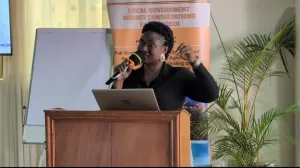
The positive economic trends coincide with government efforts to improve planning, budgeting, and implementation mechanisms under NDP IV. During the Development Plan Implementation (DPI) Programme Annual Review for FY 2024/25, Parliament reaffirmed its commitment to results-oriented oversight.
The Speaker of Parliament, Rt. Hon. Anita Annet Among, emphasized the need to reform parliamentary committees to align with the programme-based approach of the National Development Plan. She noted that the annual review should be leveraged to identify solutions to obstacles that have limited the delivery of development goals and impactful public services, highlighting challenges such as resource constraints, project delays, procurement challenges, and youth unemployment.
On her behalf, Minister of Public Service, Hon. Muruli Mukasa, launched the DPI Programme Implementation Action Plan (PIAP) and commissioned the NDP IV Monitoring and Evaluation System under the Office of the Prime Minister. The system is an integrated, web-based national performance infrastructure that connects planning, budgeting, implementation, and reporting into a single results chain.
The Deputy Head of Public Service, Jane Kyarisiima Mwesiga, said the system is fully aligned with the NDP IV results framework and programme budgeting system. Similarly, PSST Dr. Ramathan Ggoobi highlighted that the DPI programme has created a mechanism exclusively focused on ensuring the effective implementation of the National Development Plan.
“As the theme of this annual review says, let us leverage the NDP III lessons learnt for effective delivery of the NDP IV and the Tenfold growth strategy,” said Dr. Ggoobi.
Linking Economic Growth and Institutional Reforms
The improving economic indicators reflect not only market dynamics but also the government’s commitment to structured and accountable development planning. By strengthening institutional frameworks such as the DPI programme and the integrated M&E system, Uganda aims to sustain growth, enhance public service delivery, and accelerate the achievement of development goals under NDP IV.
With solid macroeconomic performance and robust governance mechanisms, Uganda is poised to continue its path of sustainable economic growth, export expansion, and improved business confidence.




Carne Lee
Leave a Comment
Your email address will not be published.