
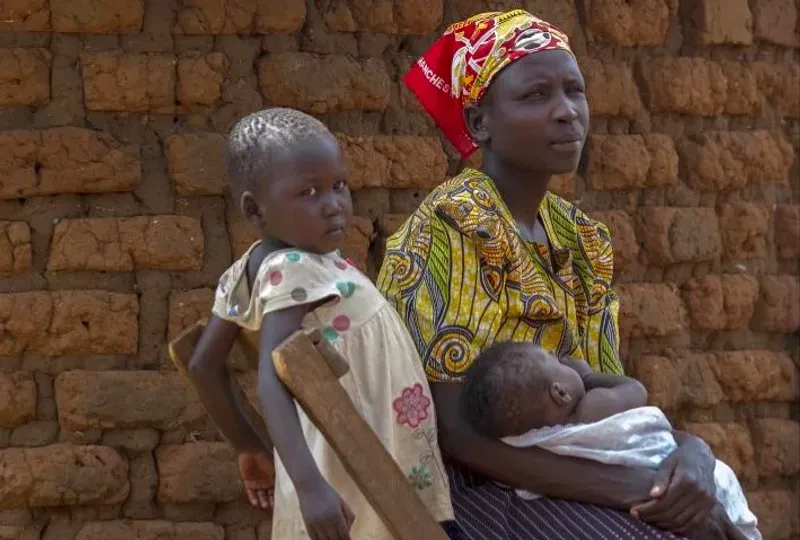



The Probation Department in Kitgum District has reported a notable reduction in incidents where children are “held hostage” due to unpaid bride price, locally referred to as luk.
In Acholi culture, luk is a traditional marriage gift given by the groom’s family to the bride’s family. It symbolizes respect, appreciation, and the forging of alliances between families. Payment of bride price not only formalizes marital unions but also strengthens clan ties.
Traditionally, men who have children before completing the bride price are not automatically entitled to full custody. In separation cases, children usually stay with their mother or her relatives until the groom fulfills his obligation.
However, Michael Ogweng, Kitgum District Probation and Welfare Officer, explains that the practice has sometimes been misused. Children have been withheld as leverage to force men into paying luk, a violation of both children’s rights and national law.
“These cases often occur when a woman leaves her marital home or separates from her husband before the full bride price is paid. In retaliation, the woman’s parents may detain the children and deny the father access until the payment is complete,” Ogweng said.
He warns that this misuse deprives children of proper care, education, and emotional stability, with some ending up on the streets.
In previous years, the department recorded an average of two daily cases where fathers were denied access to their children due to unpaid bride price. Out of every seven child neglect cases reported, over 500 annually were linked to this practice.
This year, however, only three such cases have been reported. Ogweng attributes this sharp decline to the support of UNICEF, which partners with the Ministry of Gender, Labour, and Social Development to strengthen child protection.
“The collaboration has improved parenting practices, child protection systems, and family welfare through increased funding, community sensitization, parenting dialogues, and professional training programs since 2020,” Ogweng said.
Although UNICEF funding is typically provided once or twice a year, its impact has been significant.
“We train 30 parents for five days on parenting. When we emphasise children’s rights, we are talking about love and care. Child neglect is now reducing,” he explained.
At the core of these interventions is a national parenting manual developed by the Ministry of Gender in collaboration with Makerere University and UNICEF. First launched around 2020 and revised after a pilot in Lalano Sub-County, the manual contains 14 modules, each requiring a full day to complete.
The modules cover essential topics such as effective parenting for early childhood development, adolescent parenting, promoting positive gender norms, preventing violent parenting, alternative discipline methods, and encouraging father involvement in childcare. Other sections address spousal relationships, parenting children with disabilities, digital-era parenting, and parenting in emergencies.
“This manual is unique. It addresses what is missing in most families today. Parenting is the root of many of the problems we see,” Ogweng said.
He remains optimistic that sustained support from UNICEF and the Ministry of Gender will continue to reduce cases of child neglect and family breakdown.
Despite this progress, disputes over unpaid bride price persist. A boda boda rider in Kitgum Municipality, who identified himself as Ojuk for fear of reprisals, said he has been denied access to his two children for over a year.
“They took their daughter back with them. I wanted to stay with the children, but they refused. Now my children are not in school because they chose culture over their welfare,” Ojuk explained.
He added that he stopped paying school fees after his father-in-law insisted all payments go through the children’s mother.
“They said I had no right to the children until I cleared the bride price. I felt I could not trust them with my children’s school fees,” he said.
George Obol Otira, chief of the Padibe Clan, acknowledged that while bride price is an important Acholi tradition, tying child custody to unpaid payments creates conflict and negatively affects children’s mental health.
He encouraged men to respect the tradition, describing luk as a symbol of appreciation and support for in-laws, but warned against breaking family ties over unpaid bride price, emphasizing that children suffer the most.
Kassimiro Ongom, chief of the Kotongo Clan in Agago, highlighted the balance between cultural customs and national laws.
“Children’s rights are paramount and protected under national law, but cultural laws also matter, as they predate modern legal frameworks. Parents must prioritize logic, dialogue, and the best interests of the child over emotion. That is the only way peace can prevail,” Ongom said.




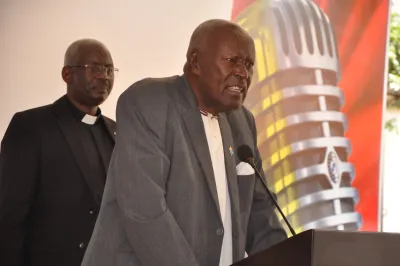

Jason Olinga
Leave a Comment
Your email address will not be published.