




Ugandan nationals are among those injured after Iranian missile and drone attacks targeted the United Arab Emirates (UAE), as tensions in the Middle East continue to escalate in an expanding regional conflict.
Officials in the UAE said their air-defence systems intercepted several incoming missiles and drones launched from Iran, but falling debris and explosions in populated areas caused injuries to civilians, including expatriate workers from multiple countries.
The incident highlights growing safety concerns for thousands of Ugandans living and working in the Gulf region.
UAE Intercepts Iranian Missiles and Drones
The UAE Ministry of Defence reported that its air-defence systems have intercepted hundreds of missiles and drones launched from Iran since the start of the attacks. While most projectiles were destroyed before reaching their targets, debris still caused injuries and property damage across the UAE, including among foreign workers such as Ugandans.
According to the UAE Ministry of Defence, air defence systems engaged 4 ballistic missiles and 6 UAVs on March 15, 2026, as part of a broader campaign responding to Iranian attacks. Since the start of the strikes, UAE air defences have intercepted 298 ballistic missiles, 15 cruise missiles, and 1,606 UAVs. The attacks have so far caused six deaths that is; Emirati, Pakistani, Nepali, and Bangladeshi nationals, and 142 minor to moderate injuries among people of multiple nationalities, including Ugandans, Egyptians, Filipinos, Indians, and others.
Drone Strike Disrupts Flights at Dubai Airport
The escalating conflict has also affected critical infrastructure in the UAE.
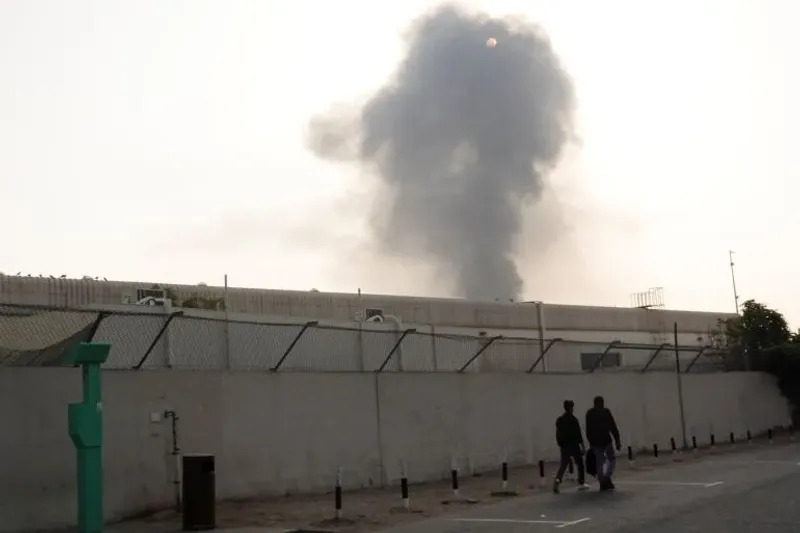
A drone strike caused a fire near Dubai International Airport, forcing authorities to temporarily halt some flights before operations gradually resumed.
Airlines were forced to cancel or reroute flights as security concerns increased across Middle Eastern airspace.
The attack marked one of several incidents targeting airports and energy facilities in Gulf countries during the ongoing confrontation.
Wider Iran War Expanding Across the Gulf
The missile attacks are part of a wider regional conflict that began after U.S. and Israeli strikes on Iran on February 28, which triggered retaliation across the Middle East.
Iran has since launched repeated missile and drone attacks against military bases, infrastructure, and strategic facilities in several Gulf states.
The crisis has also disrupted global shipping in the Strait of Hormuz, a key oil transport route through which roughly one-fifth of the world’s oil passes.
Global oil prices have surged above $100 per barrel, raising fears of a wider economic impact.
Uganda has a large diaspora community in the UAE, with more than 160,000 Ugandans living and working in the country, according to diplomatic estimates.
The injuries reported in the recent attacks have sparked concern among families back home and renewed calls for vigilance among Ugandan migrant workers in the Gulf.
Authorities have not yet released the identities or number of Ugandans injured.
Global Leaders Seek to Prevent Wider War
The escalating conflict has drawn international concern raising concerns about security around the Strait of Hormuz, a critical global oil shipping route that passes through the Gulf near the United Arab Emirates. Any disruption there could affect global energy supplies.
World leaders are discussing military cooperation to secure shipping routes in the Gulf after attacks disrupted oil transport and commercial vessels in the region.
Analysts warn that continued strikes could destabilize the Middle East and trigger further economic shocks worldwide.






Sunrise reporter
Leave a Comment
Your email address will not be published.