
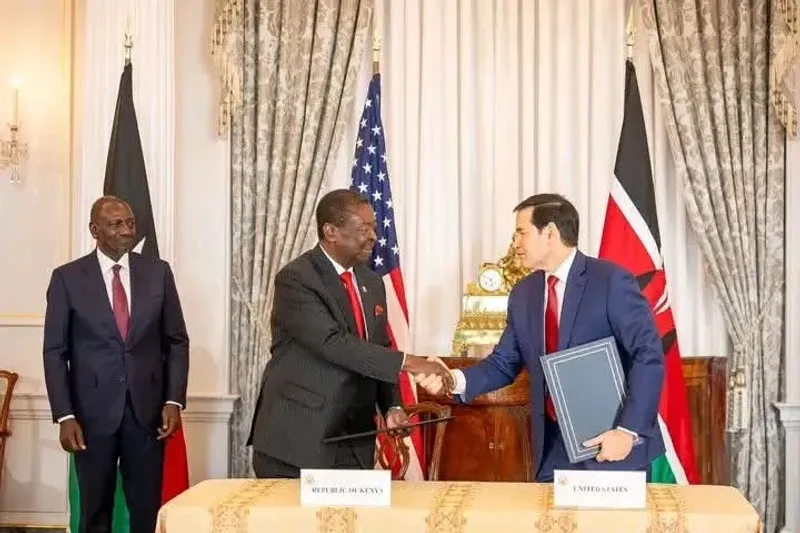





The implementation of a $2.5 billion US–Kenya health funding agreement has been halted after the High Court of Kenya issued temporary orders freezing the deal over serious data privacy and personal health information concerns. The ruling follows a petition filed by a leading consumer rights organisation questioning whether the US–Kenya health partnership could expose sensitive medical records belonging to Kenyan citizens.
According to the court orders, Kenyan authorities are barred from taking any steps that would enable the transfer, sharing, storage, or dissemination of medical, epidemiological, or personally identifiable health data to external partners. This suspension will remain in place until the legal challenge is fully heard, marking a significant setback to what had been promoted as a major health sector investment in Kenya.
The disputed agreement is part of the United States’ new global health aid strategy, which prioritises direct government-to-government deals instead of relying heavily on international aid agencies. Under the arrangement, the United States would contribute $1.7 billion, while Kenya would invest $850 million and gradually take over more responsibility for long-term health financing. US Secretary of State Marco Rubio described the deal as a “landmark agreement” aimed at strengthening Africa’s public health systems.
Following the Kenya signing, the US has pursued similar bilateral health deals with Rwanda, Lesotho, Liberia, and Uganda, signalling a broad expansion of its new aid model across Africa. However, the Kenya case has triggered intense debate, with critics warning that the agreement could allow foreign access to confidential health records such as HIV status, tuberculosis treatment history, vaccination data, and other sensitive medical information.
The Consumer Federation of Kenya (Cofek), one of the petitioners, argues that the country risks losing strategic control of its health systems if critical areas such as pharmaceutical supply chains, disease-surveillance platforms, and digital cloud-based health databases are influenced or controlled by external partners. The lobby group insists that Kenya must prioritise data sovereignty and protect its citizens’ medical information from potential misuse.
President William Ruto has defended the health partnership, assuring Kenyans that the government scrutinised the agreement thoroughly. He emphasised that all medical data generated in Kenya would remain subject to Kenyan data protection laws, not foreign regulations. Despite these assurances, public debate continues, especially among groups concerned about privacy, cybersecurity, and the long-term implications of outsourcing sensitive health infrastructure.
The United States has not issued a formal response regarding the data privacy claims raised in court. The case is scheduled for its next hearing on 12 February, when judges will decide whether the suspension should continue and whether the US–Kenya health deal is legally compliant with Kenya’s data protection framework. The ruling is expected to have major implications for international health funding agreements, digital health data governance, and future US partnerships in Africa.






Phillip Baraka
Leave a Comment
Your email address will not be published.