




Health
U.S. and Uganda Sign $2.2 Billion Health Cooperation Agreement to Strengthen Health Systems and Global Health Security
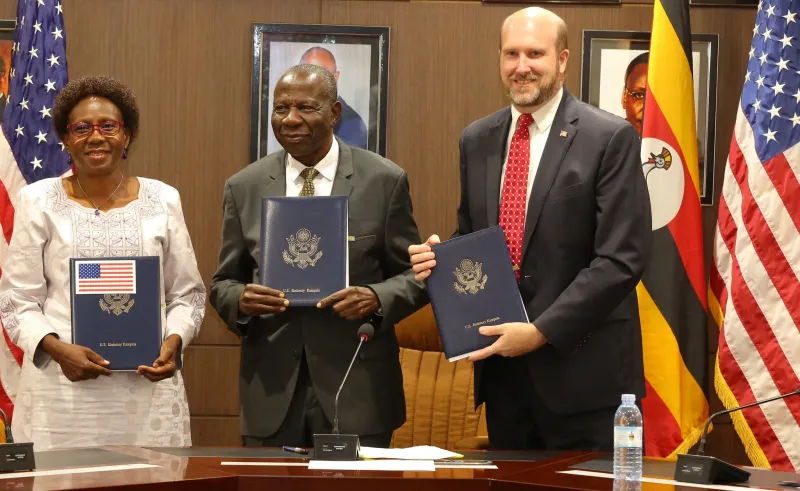
The Governments of the United States and Uganda have formalized a five-year bilateral health cooperation agreement valued at $2.2 billion. The Memorandum of Understanding (MOU) sets out a comprehensive strategy to save lives, improve Uganda’s health system, and enhance global health security, while also fostering stronger U.S.–Uganda relations.
The agreement emphasizes measures to prevent the spread of infectious diseases both regionally and internationally, reinforcing Uganda’s capacity to respond to health emergencies.
Funding Breakdown and Program Priorities
Under the MOU, the U.S. Government will contribute up to $1.7 billion over five years, targeting critical health programs such as:
- HIV/AIDS prevention and treatment
- Tuberculosis and malaria control
- Maternal and child health
- Polio eradication
- Emergency preparedness and global health security
- Human resources for health
- Disease surveillance
The Government of Uganda will complement this with more than $500 million in domestic health spending, gradually assuming greater financial responsibility to ensure sustainable, locally-owned healthcare programs.
The agreement also includes support for faith-based healthcare providers, enhancing access to primary health care across Uganda.
Statements from U.S. Officials
At the signing ceremony, held alongside Uganda’s Minister of Finance, Planning, and Economic Development Matia Kasaija, U.S. Ambassador William W. Popp said: “This agreement represents a significant commitment by the United States and Uganda to co-invest in our shared global health priorities. Today, we are building on prior successes and making a significant shift toward promoting self-reliance in the health sector through strong community health systems, clear performance metrics, and a foundational commitment to data systems and global health security that will prevent and stop outbreaks from threatening Uganda, the United States, and the world.”
This emphasizes a focus on data-driven healthcare, community health systems, and outbreak prevention, critical components of global health security.
Statements from Uganda Officials
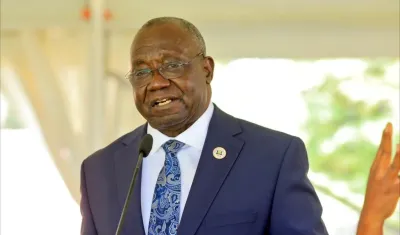
Finance Minister Matia Kasaija highlighted Uganda’s commitment: “The Government of Uganda acknowledges the critical importance of preventing the spread of emerging and existing infectious disease threats globally. With the United States Government’s support of $1.7 billion from 2026 to 2030 and our commitment to contribute over $500 million, this collaboration will yield not only disease-specific outcomes but also significant improvements in national systems, institutions, and workforce capacity.”
This partnership marks a strategic step toward sustainable health financing and system strengthening in Uganda.
Key Provisions of the Health Cooperation Agreement
The MOU outlines several provisions to ensure the long-term sustainability of Uganda’s health system:
- Commodities: Procurement of most health commodities will gradually transition from U.S. funding to Uganda’s government, strengthening supply chains and institutional capacity.
- Frontline Health Workers: U.S.-funded health workers will be mapped to national payroll positions, ensuring continuity and job security.
- Data Systems: Investment in electronic medical records (EMRs), digitization, and integration with Uganda’s national data warehouse to improve disease surveillance.
- Faith-Based Providers: Uganda will enhance healthcare services through performance-based agreements, primary healthcare grants, and digital/community health insurance programs.
- Co-Investment: Uganda will increase domestic health expenditures by over $500 million to ensure sustainable funding and gradually reduce dependence on U.S. support.
Impact on Ugandans and Local Communities
The agreement is expected to significantly improve access to healthcare services, strengthen disease surveillance, and enhance emergency preparedness. Key benefits include:
- Expanded maternal and child health services
- Strengthened HIV/AIDS, malaria, and tuberculosis programs
- Improved disease surveillance and digital health infrastructure
- Enhanced capacity of faith-based healthcare providers
By integrating digital systems and community-based healthcare programs, Uganda is set to increase the reach and efficiency of its healthcare delivery.
Historical Context and Long-Term Vision
The United States has been Uganda’s largest global health partner for over 60 years, supporting programs that save lives and strengthen health systems. This $2.2 billion MOU builds on that legacy and reinforces the shared goal of a resilient health system owned and managed by Uganda’s institutions and communities.
The partnership emphasizes self-reliance, with Uganda gradually assuming financial responsibility while leveraging U.S. expertise and investment.




The Sunrise Editor
Leave a Comment
Your email address will not be published.