
Politics
Museveni Highlights 40 Years of NRM Achievements at Kiryandongo Rally, Reaffirms Wealth Creation, Warns Against PDM Fund Abuse
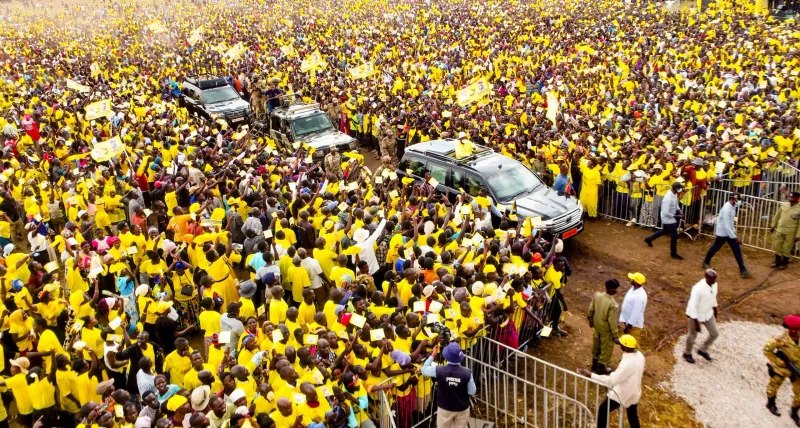
President Yoweri Kaguta Museveni drew a large crowd at Karagalya Grounds in Kiryandongo District on Wednesday, revisiting the National Resistance Movement’s (NRM) 40-year impact on Uganda’s stability and development. He was accompanied by First Daughter Natasha Museveni Karugire and senior NRM officials.
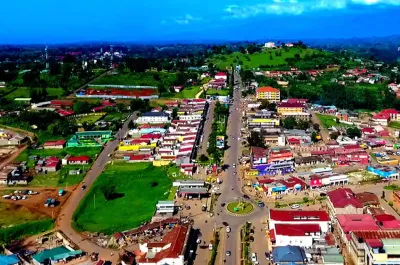
During the address, Museveni recalled his early visits to the district when areas like Katulikire and Bweyale were sparsely populated. He highlighted the resettlement of displaced people from Anaka during the Congo conflict, which he said played a key role in shaping today’s vibrant Bweyale town.
Peace and National Stability: NRM’s Core Achievements
The President emphasized that peace is the NRM’s most significant accomplishment, crediting the government’s rejection of religious, tribal, and other forms of discrimination for Uganda’s relative stability in the region. He noted that peace has allowed national institutions to grow stronger and facilitate long-term development.
Museveni also underscored infrastructure improvements, including roads, schools, and public facilities, while acknowledging ongoing local concerns about healthcare access. He pledged upgrades for Kigumba, Kiryandongo, and Panyadoli hospitals, emphasizing that health infrastructure remains a priority.
Expressing frustration that some parts of Kiryandongo still lack electricity despite hosting major power installations, Museveni directed Prime Minister Robinah Nabbanja to address distribution gaps to ensure equitable access.
Driving Household Prosperity Through Agriculture and Enterprise
Museveni stressed that infrastructure alone cannot transform livelihoods without enhanced household incomes. He reiterated the four-acre model outlined in the 1996 NRM Manifesto:
- Small-scale farmers should pursue seven recommended enterprises.
- Large-scale farmers can focus on tea, cotton, ranching, and other commercial ventures.
Government initiatives such as the Parish Development Model (PDM) and Emyooga remain critical tools in poverty alleviation. The President warned against unauthorized deductions from PDM funds, stressing that every beneficiary must receive the full UGX 1 million allocation. “We shall deal with anyone reducing PDM money. That money is for the poor,” he cautioned.
Job Creation and Youth Empowerment
Job creation through commercial agriculture, industry, services, and ICT remains a key focus. Museveni highlighted Kamuli poultry farmer Johnson Basangwa, who employs 300 people, as an example of enterprise-driven employment.
He encouraged urban youth to take advantage of skilling hubs that offer vocational training in trades such as welding, baking, and hairdressing. “The aim is to bring all Ugandans into the money economy,” he said, emphasizing the importance of skills development for economic inclusion.
Local Leadership Praises NRM’s Role in Development
- Speaker of Parliament Rt. Hon. Anita Among applauded Uganda’s refugee hosting policies in Kiryandongo, stating that it demonstrates the country’s security and humanitarian commitment.
- Prime Minister Rt. Hon. Robinah Nabbanja credited Museveni for peace-driven development in the Bunyoro region, which has facilitated investment and infrastructure growth.
District NRM Chair Hon. Linos Ngopek described Kiryandongo as a diverse but united district, thanks to the stability ushered in by the NRM. He welcomed the Karuma Power Station but raised concerns about limited electricity access in Bweyale Town Council, urging improved service delivery. Ngopek also appealed for a modern market in Bweyale and the upgrading of Kiryandongo Hospital into a highway referral facility to meet growing demand.
Local Development Insights
- According to government reports, Kiryandongo has seen a population growth of over 30% in the past two decades due to resettlement and economic opportunities.
- Despite this growth, only about 40% of households have consistent electricity access, highlighting the need for distribution improvements.
- Health indicators show that while infant mortality has decreased nationally, local facilities in Kigumba and Panyadoli remain under-resourced, emphasizing Museveni’s hospital upgrade pledges.

Sunrise reporter
Leave a Comment
Your email address will not be published.