
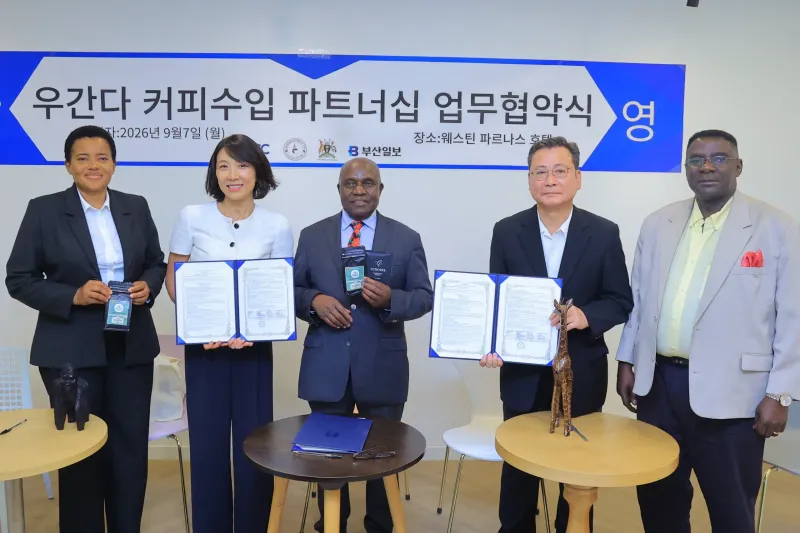




Uganda is opening a new chapter in its coffee export drive after securing a partnership with South Korean coffee company GVCC Co. Ltd, creating a new route for Ugandan coffee into South Korea and potentially other Asian markets.
The agreement was signed in Busan on September 7, 2026, with Besmark Coffee Company Ltd designated as Uganda’s exclusive supply partner and GVCC taking responsibility as the exclusive distributor of Ugandan coffee in South Korea. The partnership is already moving into its implementation phase, with an initial shipment of two containers of Ugandan coffee being transported to Busan.
The deal was reached on the sidelines of the Uganda–Korea Trade and Investment Meeting and is expected to strengthen commercial links between the two countries while giving Ugandan coffee exporters greater access to the Asian market.
Beyond South Korea, the partnership could give Uganda a strategic entry point into wider Asian markets. The partners intend to use Busan as a potential regional hub where Ugandan coffee can be processed, undergo value addition and subsequently be re-exported to markets such as Japan and countries in Southeast Asia.
GVCC Chief Executive Soo-jung Lim has expressed strong interest in Ugandan coffee, following earlier engagement with the Ugandan delegation at a coffee exhibition in Busan. Uganda’s Ambassador to Japan, Tophace Kaahwa, who is also accredited to South Korea, said the South Korean company is targeting significantly higher volumes in the future, including an ambition to import about one 20-tonne container each day, equivalent to roughly 3,500 tonnes annually.
That potential increase in demand could create new opportunities for Ugandan coffee farmers, processors and exporters, while also placing greater emphasis on production, consistency and quality across the supply chain.
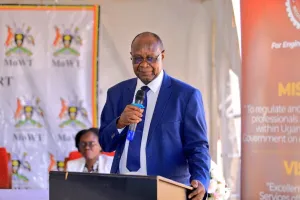
Uganda’s Second Deputy Prime Minister, Dr Crispus Kiyonga, who led the Ugandan delegation, welcomed the partnership and reaffirmed the government’s commitment to supporting reliable market access for the country’s coffee.
However, the government is also pushing for more coffee to be processed within Uganda rather than exported primarily as raw beans. The emphasis on domestic value addition is intended to help Uganda capture a larger share of the value generated along the coffee supply chain and turn the crop into a stronger contributor to industrialisation, employment and household incomes.
The South Korea agreement is also being viewed as an early commercial outcome of Uganda’s Economic and Commercial Diplomacy strategy, which encourages the country’s diplomatic missions to identify export markets, attract investment and promote Ugandan products abroad. The arrangement was coordinated through Uganda’s diplomatic representation in Tokyo, which is also accredited to South Korea.
Uganda is seeking to expand its coffee production as demand for its beans grows internationally. The country produces both Robusta and Arabica coffee, with Robusta accounting for the larger share of exports. The coffee sector is heavily dependent on smallholder farmers, making international market expansion potentially important for incomes across farming communities.
Recent figures cited in reporting show the scale of Uganda’s growing coffee trade. In the 12 months to May 2026, Uganda exported about 8.6 million 60-kilogramme bags of coffee valued at approximately $2.3 billion, up from about 7.4 million bags in the preceding year.
The country has traditionally relied heavily on European markets, while Asia has taken a smaller share of Ugandan coffee exports. The new South Korean partnership therefore provides an opportunity to broaden Uganda’s customer base and increase the presence of Ugandan coffee in a region with significant consumption and re-export potential.
For Uganda, the significance of the Busan agreement goes beyond the first two containers. If the proposed expansion in volumes materialises, the partnership could provide a stronger and more predictable Asian market for Ugandan coffee while encouraging increased production at farm level.
It could also strengthen Uganda’s efforts to move from exporting agricultural commodities toward a model that places greater emphasis on processing and value addition. The government’s longer-term ambition is to ensure that Ugandan farmers and businesses capture more economic value before products reach international consumers.
The partnership comes as Uganda seeks to deepen trade with South Korea and address an imbalance in bilateral commerce. Available figures cited by Ugandan officials indicate that the value of Uganda’s exports to South Korea remains considerably lower than its imports from the Asian country. Expanding coffee exports is therefore seen as one avenue for increasing Uganda’s earnings from the Korean market.
With the first consignment already headed for Busan, the focus now shifts to whether the partnership can grow into the larger supply relationship envisioned by the two sides. For Uganda’s coffee farmers and exporters, the opening of another Asian market could provide a significant boost as the country works to expand production, strengthen value addition and increase the contribution of coffee to national economic growth.





Sunrise reporter
Leave a Comment
Your email address will not be published.