
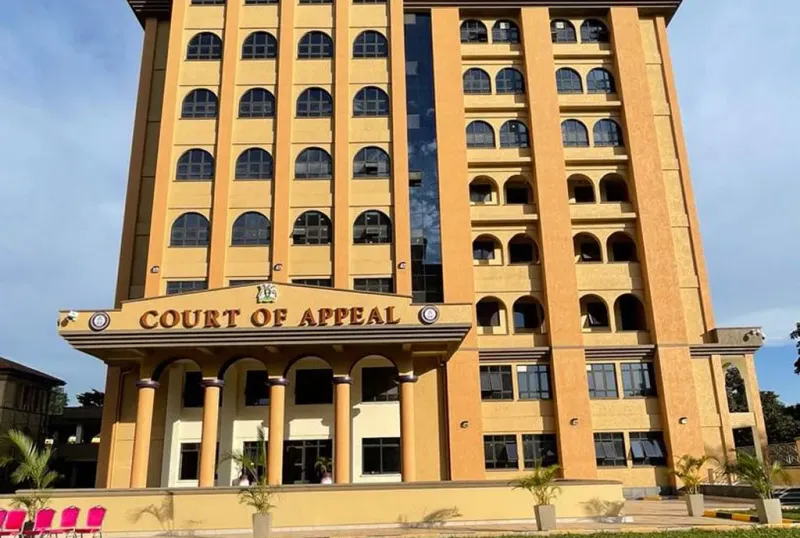




The Judiciary has established eight Court of Appeal Circuits across the country as part of a major reform aimed at bringing appellate justice closer to the public, reducing case backlog, and lowering the cost of accessing justice.
According to a press statement issued by the Judiciary on Saturday, the reform is intended to decongest the Court of Appeal in Kampala, shorten appeal timelines, and improve efficiency and effectiveness in the delivery of justice nationwide.
The Judiciary states that the establishment of the circuits is anchored in Legal Notice Number 21 of 2025, The Constitution (Creation of the Court of Appeal Circuits) (Practice) Directions, 2025, issued on October 30, 2025, by then Chief Justice Emeritus, Justice Alfonse Chigamoy Owiny-Dollo, pursuant to Article 133(1)(b) of the Constitution.
Under the new arrangement, the Court of Appeal will sit in Arua, Fort Portal, Gulu, Jinja, Masaka, Mbale, Mbarara, and Mubende. The Judiciary notes that this structure will enable advocates and litigants to access appellate court services closer to their regions of residence and operation, significantly reducing travel costs and delays associated with attending court sessions in Kampala.
In the statement, the Judiciary explains that the reform forms part of its broader commitment to strengthening access to justice, enhancing public confidence in the justice system, and improving service delivery across the country.
The Judiciary further indicates that the operationalisation of the Court of Appeal Circuits will be undertaken in phases, beginning with Gulu and Mbarara, following the completion of construction of the respective courthouses.
As a transitional measure, the Judiciary states that all appeals and constitutional petitions currently pending before the Court of Appeal in Kampala, which fall within the jurisdiction of the newly created circuits and have not yet been heard, will be transferred to the respective circuits once they become operational.
According to the Judiciary, the Kampala Court of Appeal will continue to handle appeals arising from the Family, Land, Criminal, International Crimes, Civil, Commercial, and Anti-Corruption Divisions of the High Court, as well as High Court circuits of Wakiso, Luwero, and Entebbe.
The Judiciary outlines that the Arua Circuit will serve Arua, Moyo, and Nebbi districts; the Fort Portal Circuit will cover Fort Portal, Hoima, Kasese, and Masindi; the Gulu Circuit will serve Gulu, Apac, Dokolo, Kitgum, Lira, and Patongo; and the Jinja Circuit will cover Jinja, Bugiri, Iganga, Lugazi, and Mukono.
The Masaka Circuit will serve Masaka, Rakai, and Mpigi; the Mbale Circuit will cover Mbale, Pallisa, Tororo, Soroti, Kumi, and Moroto; the Mbarara Circuit will serve Mbarara, Bushenyi, Ibanda, Kabale, Rukungiri, and Ntungamo; while the Mubende Circuit will cover Mubende and Kiboga districts.
The Judiciary adds that each Court of Appeal Circuit will be composed of five Justices assigned by the Deputy Chief Justice. The Deputy Chief Justice, in consultation with the Chief Justice, will also designate a Head and Deputy Head for each circuit.
According to the Judiciary, the decentralisation of the Court of Appeal is expected to significantly improve timely, affordable, and effective access to appellate justice for Ugandans.
In 2022, Cabinet approved the construction of eight regional appellate courts across the country in a bid to take justice closer to the people. The Chief Justice Emeritus had earlier indicated that construction of regional appellate courts was to begin in the same financial year in Mbarara and Gulu districts, where land had already been secured. He further stated that the project was expected to extend to Masaka, Arua, Mbale, Jinja, Soroti, and Mubende districts in subsequent financial years as funding became available.
Currently, Uganda operates a single appellate court based in Kampala, requiring justice seekers to travel long distances from across the country for appeal hearings. The operationalisation of the regional Court of Appeal Circuits comes at a time when the Judiciary has been facing challenges related to case backlog and staffing gaps.



Roswell Mbabazi
Leave a Comment
Your email address will not be published.