




Uganda’s economy continues to grow as the government reaffirms its commitment to key economic reforms and investment of over USD 600 million in infrastructure across regional cities.
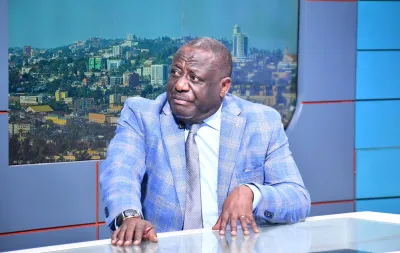
Speaking at the NRM Party Secretariat on Kyadondo Road in Kampala, the Permanent Secretary and Secretary to the Treasury, Dr. Ramathan Ggoobi, said Uganda’s economy has all the essential ingredients required to create wealth and prosperity for citizens, largely due to deliberate reforms implemented by the NRM Government over the years. Dr. Ggoobi, who represented the Minister of Finance, Planning and Economic Development, noted that these reforms have laid a firm foundation for a transformative, resilient, and fast-growing economy.
He explained that Uganda’s economic progress has been driven by the elimination of price controls, liberalisation of the economy and the foreign exchange market, liberalisation of the current and capital accounts, export diversification, privatization and rationalization of state enterprises, alongside prudent macroeconomic management. He also cited the establishment of the Uganda Revenue Authority in 1991 and sustained investment in infrastructure as key milestones that strengthened the country’s economic stability.
As a result of these measures, Uganda’s economy is projected to expand 17 times compared to its size in 1986, with the gross domestic product expected to reach USD 68.4 billion by June 2026. Dr. Ggoobi added that Uganda has met the requirements for assessment by the United Nations toward graduation to middle-income status, supported by rising incomes and improved household welfare.
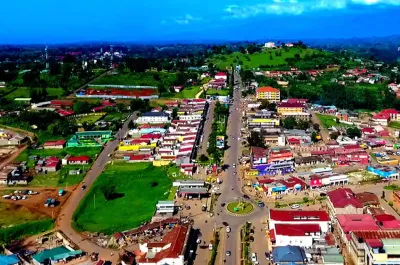
Dr. Ggoobi said government has earmarked over USD 600 million to finance infrastructure development in regional cities, targeting roads, markets, electricity distribution, street lighting, water supply, drainage, sanitation, and other urban services. The investment is intended to support rapid urbanisation, stimulate economic growth, and position regional cities as centres of trade, industry, and employment creation, while easing pressure on Kampala.
He noted that improving urban infrastructure, particularly the tarmacking of city roads, will enhance mobility, reduce dust pollution, improve security through street lighting, and lower the cost of doing business for traders, transporters, and manufacturers. The funding, he emphasized, will be strictly used for development projects and not recurrent expenditures such as salaries.
Uganda’s improved revenue performance is expected to support these investments, with the country collecting about Shs 32 trillion in tax revenue in the previous financial year and projecting Shs 37 trillion in the current financial year. Dr. Ggoobi stressed that government borrowing remains focused on financing infrastructure and other productive investments that generate long-term economic returns, while recurrent expenditures are financed through domestic revenues.
He said the impact of the reforms is already visible in improved living standards, with national poverty levels declining from 21.4 percent in 2016 to 16.1 percent in 2025. Over the same period, the proportion of households engaged in subsistence activities fell sharply from 68.9 percent in 2010 to 33.1 percent by FY 2023/24, reflecting increased participation in the money economy.
Uganda’s per-capita gross national product rose to USD 1,278 in FY 2024/25, from a low of about USD $570, 10-years ago. “This is compared to the current benchmark of USD 1,136 for a country to be classified in the lower-middle income category. Our projections indicate that our per-capita income will rise to USD 1,324 by end of FY 2025/26,” said Dr. Ggoobi.
Dr. Ggoobi said these gains demonstrate the effectiveness of government policy and provide momentum for sustained economic transformation.
Looking ahead, government aims to expand the size of the economy to USD 500 billion by 2040, focusing resources on key anchor sectors including agriculture, tourism, minerals, and science and technology, supported by continued investment in infrastructure and human capital.
“The NRM Government remains resolute to transform Uganda into a modern, inclusive, and competitive economy that works for all,” Dr. Ggoobi said.

Sunrise reporter
Leave a Comment
Your email address will not be published.