




Kampala Capital City Authority (KCCA) has licensed nine private companies to collect and evacuate garbage across the city as part of new measures to improve waste management and curb illegal dumping.
The authority has also banned unauthorised waste collection using tuk-tuks, wheelbarrows, bicycles and handcarts, saying such practices have contributed to the creation of illegal dumpsites along roads and drainage channels.
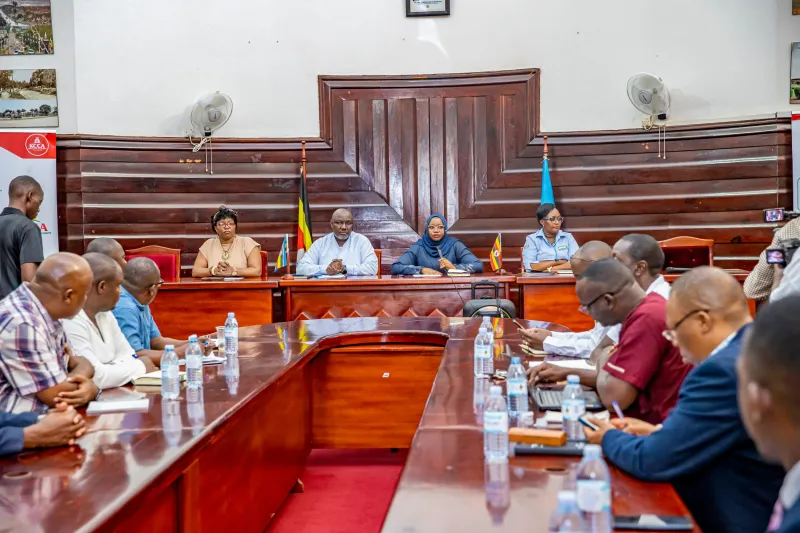
KCCA Executive Director Sharifah Buzeki announced the new waste collection arrangement during a media briefing at the Mayor’s Parlour on Friday.
The nine private collectors will operate in designated city zones under a structured system intended to ensure that waste is collected on schedule and transported directly to authorised disposal and waste management facilities.
Kampala generates an estimated 2,000 to 2,500 tonnes of waste every day, creating significant pressure on the city’s existing waste management system.
Buzeki said licensing private collectors would help bridge the gap between the amount of waste generated in Kampala and the available capacity to evacuate it.
“We are putting in place a system that gives Kampala the capacity to evacuate the waste that we generate every day. This is about bringing order, accountability and efficiency into waste management,” Buzeki said.
Eight of the nine licensed companies have already obtained operational licences from KCCA and have a combined capacity of 1,469 tonnes of waste per day. The ninth company is expected to handle about 200 tonnes daily but is awaiting final allocation of its operational zone.
Together with KCCA’s own waste evacuation capacity of about 500 tonnes per day, the new system is expected to provide capacity for more than 2,100 tonnes of waste daily.
Buzeki said the increased capacity would bring Kampala closer to meeting its daily waste evacuation needs, but stressed that improved waste management would also require cooperation from residents, businesses and institutions.
Nine companies licensed to collect waste
The approved private waste collectors and their designated areas are: Nabugabo Updeal Joint Venture Ltd – Central Division, Hill Top Enterprises Ltd – Kawempe South, YoWaste Ltd – Kawempe North, MTSL Energies Ltd – Lubaga South, Bigseal Holdings Ltd – Makindye East, Ecoserv Ltd – Nakawa West, De Waste U Ltd – Nakawa East, and Biohaz Waste – Makindye West.
The ninth licensed collector will be assigned an operational zone after the allocation process is completed.
The new system is expected to cover Kampala’s 857 villages, with designated waste collection points, collection schedules and household monitoring.
KCCA introduces 'bring-to-truck' waste collection model
KCCA says it is moving away from a system where residents dump waste on the ground and wait for collection trucks to arrive.
Instead, the authority is introducing a “bring-to-truck” model, under which waste will be taken to designated collection points and loaded directly onto collection trucks.
Buzeki also urged residents to separate waste at source, particularly organic and inorganic waste, saying this would support waste recovery and recycling.
She warned that unauthorised collectors using handcarts, bicycles and three-wheelers would not be allowed to operate.
“We cannot continue to have a situation where waste is collected from a home and then dumped somewhere along the road or in a drainage channel. That defeats the whole purpose of waste collection,” Buzeki said.
New Kampala garbage collection charges
Under the new arrangement, residents and businesses will pay approved fees for routine waste collection.
Informal settlements classified as urban poor will pay Sh1,000 per 50kg bag, while other domestic households and commercial premises will pay Sh3,000 per 50kg bag.
Institutions such as schools, churches, mosques and temples will pay Sh40,000 per load.
The rates were approved by the KCCA Council in October 2024 and will apply to routine waste collection across Kampala.
KCCA Deputy Executive Director Benon Kigenyi said the charges were intended to keep waste collection affordable while giving service providers the resources needed to sustain their operations.
He said the polluter-pays principle requires waste generators to take responsibility for proper waste management by using authorised collectors and paying the approved rates.
KCCA will continue to manage waste generated at Government common-user facilities, including public markets, KCCA taxi parks and KCCA health centres.
Kampala National Cleaning Day to continue beyond August 29
The waste management reforms come as KCCA prepares for the National Cleaning Day scheduled for August 29, following guidance from Government communicated by Prime Minister Robinah Nabbanja at a meeting on August 12.
However, KCCA says the August 29 exercise will not be treated as a one-day campaign.
Weekly Weyonje/KCCA cleaning activities will continue as part of a sustained effort to improve sanitation and cleanliness across Kampala.
Kigenyi said the authority wants to establish a waste collection system that residents can understand, access and use to hold service providers accountable.
“The issue is not simply to collect garbage on National Cleaning Day and then return to the same situation the following week. We are putting in place a system that should continue beyond August 29,” he said.
Division Town Clerks, local leaders, ward administrators, solid waste officers and licensed collectors will work together to establish collection points and schedules in communities.
Kigenyi said residents should know where their waste should be taken, when it will be collected and which service provider is responsible.
Government invests in Kampala waste management
The reforms are also being supported by additional Government investment in waste management infrastructure.
Government has committed funding for 10 new garbage trucks by the end of the 2026/27 financial year.
It has also allocated Sh13 billion to begin development of a waste management facility at Buyala for material recovery and waste repurposing.
KCCA says the combination of additional waste evacuation capacity, licensed private collectors, improved collection systems and investment in waste management infrastructure is intended to make Kampala cleaner and more liveable.
Buzeki said maintaining a clean city would require cooperation from households, traders, institutions and businesses, while KCCA would focus on providing the system, enforcing standards and ensuring service delivery.
The authority expects the new arrangement to reduce illegal dumpsites along roads, speed up waste evacuation and improve accountability among waste generators and service providers.





The Sunrise Editor
Leave a Comment
Your email address will not be published.