

The Office of the President is set to conduct a 12-day monitoring exercise across all nine districts of the Karamoja sub-region to establish how billions of shillings allocated to government wealth-creation programmes and infrastructure projects are being utilised.
The exercise, scheduled to run from November 16 to 27, 2026, will assess the implementation, accountability and impact of government investments, particularly the Parish Development Model (PDM), Emyooga and the Karachuna Economic Empowerment initiative.
The Minister of State for Economic Monitoring, Hon. Santa Sandra Alum-Ogwang, announced the planned operation while addressing journalists at the Uganda Media Centre in Kampala on Thursday.
According to the minister, the monitoring teams will establish whether government funds are reaching their intended beneficiaries, whether projects are delivering the expected results and whether responsible institutions are addressing implementation challenges.
The exercise will particularly examine Shs1.92 billion disbursed under the Parish Development Model in Karamoja and Shs10.3 billion allocated to eligible occupational groups under the Emyooga programme. The two interventions account for a combined Shs12.22 billion in government funding.
Under the Parish Development Model, monitoring teams will verify whether beneficiaries received the funds and invested them in the intended income-generating activities, including livestock keeping, crop production, poultry farming and beekeeping.
Officials will also assess loan repayment rates and the availability of agricultural extension services to determine whether beneficiaries are receiving the support needed to sustain their enterprises.
The Emyooga programme will also come under scrutiny, with the monitoring teams expected to examine the management and performance of Savings and Credit Cooperative Organisations (SACCOs).
The assessment will focus on SACCO governance, financial records, member participation and the management and recovery of government seed capital to establish whether the funds are being properly managed and revolved to benefit more members.
The monitoring exercise will further examine the Karachuna Economic Empowerment initiative, which supports reformed youth through economic opportunities intended to promote sustainable livelihoods and peaceful participation in community development.
Working with institutions such as the Microfinance Support Centre, the monitoring teams will establish whether the intended beneficiaries received the support, how they have utilised the resources and whether their economic activities are viable and productive.
Beyond wealth-creation programmes, government officials will inspect infrastructure investments, including roads, dams, valley tanks, boreholes, irrigation facilities and markets.
The inspections will assess the progress, quality and functionality of the projects, as well as whether contractors have fulfilled their contractual obligations and communities are benefiting from the completed facilities.
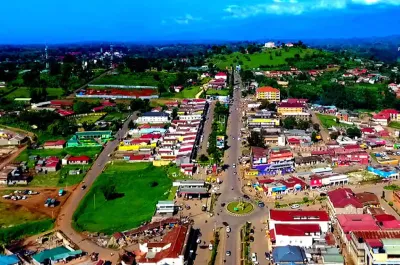
The exercise comes as Karamoja continues to face development challenges, including water scarcity, poor road connectivity, recurrent drought and limited access to markets, despite its considerable potential in livestock, agriculture and mineral resources.
According to the 2024 Uganda National Population and Housing Census, Karamoja has a population of approximately 1.5 million people, whose livelihoods depend largely on the region's natural and economic resources.
Alum-Ogwang said the monitoring exercise would help government identify achievements, implementation gaps and areas requiring corrective action in collaboration with district leaders and responsible institutions.
"Our purpose is to recognise achievements, identify implementation gaps, and agree on corrective actions with the responsible institutions and district leadership," she said.
She warned that the government would not tolerate the mismanagement of public resources, emphasising that the exercise would involve reviewing financial and administrative records, conducting field inspections and engaging directly with beneficiaries and SACCO leaders.
The minister further cautioned that suspected cases of corruption, embezzlement or misuse of public funds uncovered during the exercise would be documented and referred to the State House Anti-Corruption Unit for investigation and appropriate action.
At the conclusion of the 12-day operation, the Office of the President will convene an exit meeting involving local government representatives and relevant Ministries, Departments and Agencies to discuss preliminary findings.
The meeting will also identify implementation bottlenecks and assign responsibilities to the institutions required to address the shortcomings.
Alum-Ogwang urged leaders across the nine districts to cooperate with the monitoring teams and make themselves available throughout the exercise.
She also encouraged beneficiaries to speak openly about their experiences, including challenges encountered while accessing or utilising government support.
The minister called on the media to support the accountability exercise through accurate and responsible reporting, saying the people of Karamoja deserve tangible results from government investments.

Sunrise reporter
Leave a Comment
Your email address will not be published.