
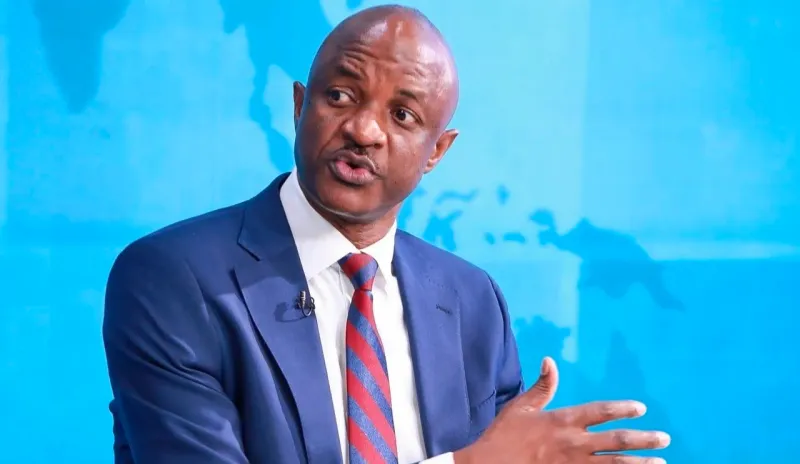





Uganda’s economy has grown to about USD 70 billion, according to the Permanent Secretary and Secretary to the Treasury (PSST), Dr. Ramathan Ggoobi.
Speaking during a television programme, Dr. Ggoobi said the increase in the size of the economy means Uganda now needs to expand its economy about sevenfold, compared to the earlier targeted tenfold growth, to achieve the government’s goal of building a USD 500 billion economy over the next 15 years.
Dr. Ggoobi said there is now policy consensus across government, with alignment from the private sector, financial sector and development partners.
He noted that the alignment is reflected in the Fourth National Development Plan (NDP IV), saying policy consensus is critical to achieving long-term economic transformation.
“Policy consensus is the first step and that is where we have been failing,” Dr. Ggoobi said, adding that the Asian Tigers transformed their economies through policy consensus.
The PSST said the previous financial year was unique compared to other election years, citing stable inflation, a stable Ugandan shilling, strong economic growth and increased exports, particularly coffee.
He also commended the Bank of Uganda for working closely with the Ministry of Finance to coordinate fiscal and monetary policy, saying the collaboration has helped maintain macroeconomic stability.
Dr. Ggoobi identified low domestic revenue mobilisation as the greatest risk to achieving the USD 500 billion economy. He said the challenge must be addressed through full implementation of the government’s revenue mobilisation strategy.
According to government projections, domestic revenue is expected to increase from Shs 35.7 trillion in FY 2025/26 to Shs 45.6 trillion in FY 2026/27. Government is also targeting an increase in the tax-to-GDP ratio from about 14 percent to 20 percent by 2030.
The PSST said Uganda continues to face challenges including a narrow tax base, which places much of the tax burden on compliant taxpayers, and a large informal sector that is difficult to tax.
Looking ahead, he said government is implementing reforms aimed at improving procurement to eliminate corruption, strengthening project implementation, prioritising concessional financing for infrastructure development, and promoting value addition in sectors such as coffee, minerals, fruits, vegetables, beef and dairy.






Sunrise reporter
Leave a Comment
Your email address will not be published.