


The Uganda National Oil Company (UNOC) has highlighted growing opportunities for Ugandan businesses to participate in the country’s petroleum industry, as it brought suppliers and service providers together for its Q3 Supplier Development Workshop.
The workshop focused on helping Ugandan companies understand opportunities across the petroleum value chain while strengthening their preparedness, compliance and ability to compete for contracts.
UNOC also shared updates on major oil and gas projects, including Tilenga and Kingfisher, with small and medium-sized enterprises (SMEs) attending the National Content Workshop.
According to updates shared at the workshop, the Tilenga project is approximately 74% complete. A total of 272 of the planned 421 wells have been drilled, while construction of the Central Processing Facility (CPF) is about 63% complete.
At the Kingfisher project, overall progress was reported at approximately 80%. Engineering is substantially complete at 99.83%, while pre-commissioning activities are underway. UNOC said 139 of the project's 148 subsystems had been inspected and completed.
The updates provide Ugandan suppliers with an indication of the stage reached by some of the country's major petroleum developments and the types of opportunities that may arise as projects advance.
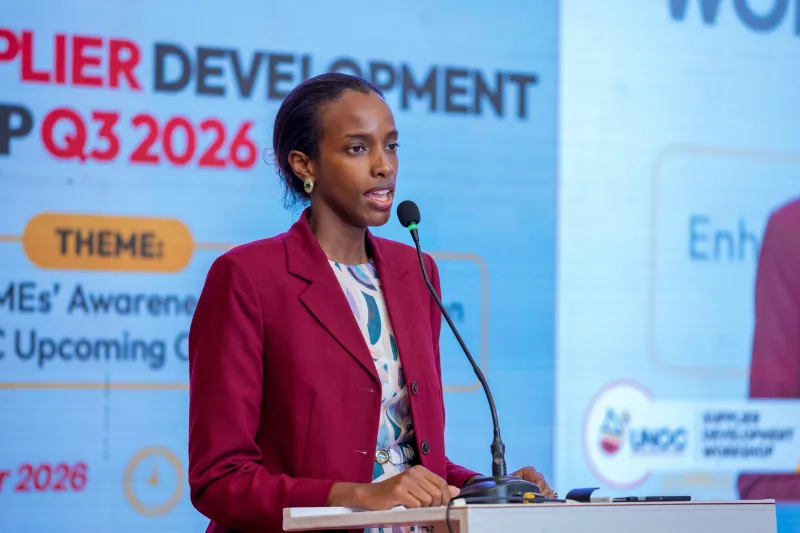
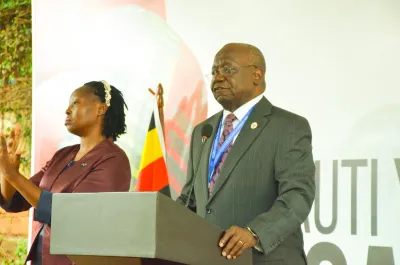
Speaking at the Supplier Development Workshop, UNOC's Head of National Content, Bintu Peter, pointed to the expanding opportunities available to Ugandan businesses in the oil and gas sector.
She emphasised the importance of suppliers being prepared, compliant and competitive.
UNOC said 50 SMEs have completed training towards ISO certification. Enterprise Support Clinics in Mpigi have also supported more than 500 SMEs with business formalisation and compliance guidance.
The company is also supporting skills development, including training for 40 6G-coded welders, alongside programmes targeting young people and women.
UNOC also highlighted investment opportunities at Kabalega Industrial Park (KIP), which has 2,185 acres of investable land.
According to UNOC, the park offers potential opportunities in areas including petrochemicals, fertiliser, manufacturing, agriculture, logistics, warehousing and commercial services.
The industrial park is being developed alongside infrastructure that includes a 240-megawatt power substation, an 86-kilometre access road network and water infrastructure.
UNOC cited preliminary projections of between 32,000 and 35,000 direct and indirect jobs and a broader KIP contribution of US$4.9 billion annually to GDP.
These figures are projections presented by UNOC and should not be interpreted as jobs or economic output already realised.
The planned 60,000-barrels-per-day refinery is another project highlighted as a source of potential business opportunities for Ugandan companies.
UNOC said opportunities associated with the refinery could span construction, professional services, agriculture, logistics, fabrication and technical trades.
The company cited projections that the refinery project could create up to 32,000 jobs, contribute US$3.3 billion to national GDP and generate US$8.2 billion in capital formation.
UNOC also linked the refinery to efforts to reduce Uganda's reliance on imports.
The Kampala and Jinja Storage Terminal projects were also presented as areas where Ugandan businesses could participate.
UNOC said opportunities could include civil works, construction materials, mechanical and electrical works, logistics, hospitality and professional services.
The Kampala Storage Terminal is planned with a capacity of 255 million litres, while the Jinja Storage Terminal is being upgraded from 30 million litres to 40 million litres.
The projects are also expected to provide opportunities for training, internships, graduate programmes and employment.
UNOC Chief Operating Officer Samantha Muhwezi thanked Ugandan companies for their contribution to developing the country's sovereign capabilities.
She encouraged businesses to focus on delivering projects successfully and building sustainable commercial operations.
Muhwezi also pointed to the capital-intensive nature of oil projects and their exposure to wider macroeconomic changes. She urged Ugandan companies to assess where they can make a meaningful and sustainable contribution before entering contracts.
The message from the workshop was therefore not only about the availability of opportunities, but also about the need for Ugandan businesses to develop the capacity required to participate effectively in major petroleum projects.
As Uganda's oil and gas developments progress, UNOC's supplier development initiatives are aimed at improving the ability of local companies to participate in procurement, services, skills development and other activities connected to the petroleum value chain.





Roswell Mbabazi
Leave a Comment
Your email address will not be published.