
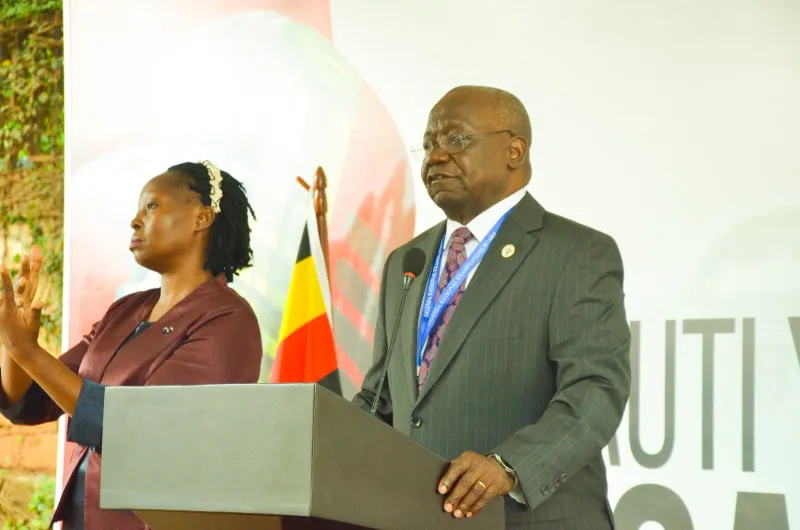




The Uganda National Examinations Board (UNEB) has released the timetables for the 2026 Primary Leaving Examination (PLE), Uganda Certificate of Education (UCE) and Uganda Advanced Certificate of Education (UACE), as the number of registered candidates rises to 1,627,885.
The 2026 examinations will be conducted under the theme, “Advancing Excellence in Assessment and Certification through Secure, Credible, Inclusive and Innovative Processes.”
According to UNEB, the total number of candidates has increased by 211,437, or 14.9 per cent, from 1,416,448 candidates registered in 2025.
PLE, UCE and UACE candidature increases
PLE has registered 920,796 candidates, up from 818,885 in 2025, representing a 12.4 per cent increase.
At UCE level, candidature has risen from 432,163 in 2025 to 503,214 candidates, an increase of 16.4 per cent.
UACE has recorded the largest increase among the three examination levels, with candidature rising from 166,400 in 2025 to 203,875, representing a 22.5 per cent increase.
UNEB Executive Director Dan Odongo attributed the sharp increase in candidature across the examination levels to higher completion rates, with more learners remaining in school and progressing to the next level.
Overall, 52 per cent of the candidates are female and 48 per cent are male, while 6,090 candidates are learners with Special Educational Needs (SNE).
UNEB also reported that 52 per cent of the total candidature is sponsored by the government under the Universal Education programmes for primary and secondary education.
Sharp rise in UACE science registrations
UNEB has also reported a significant increase in registration for traditional science subjects among UACE candidates.
Physics registration has risen to 35,029, an increase of 64.4 per cent.
Chemistry has 64,501 candidates, representing a 73.7 per cent increase, while Biology registration stands at 64,288, an 80.3 per cent increase.
The Board described the increase in traditional science-subject candidature at UACE as particularly sharp.
The development comes as Uganda continues implementing curricula and assessment approaches aligned with the Competency-Based Curriculum (CBC).
The 2026 UCE candidates are the third cohort to be assessed under the CBC at lower secondary level. UNEB also said the 2026 UACE candidates were among the pioneer cohorts to undertake the CBC at lower secondary level and will be assessed under a curriculum aligned with CBC and its corresponding assessment modalities.
UNEB warns schools over registration errors
UNEB has urged schools and examination centres to carefully verify candidate registration information.
The Board said candidates who identify anomalies in their registration data should notify school authorities, who will alert UNEB for the necessary corrections.
Candidates who paid registration fees before the set deadlines but were not registered have also been advised to report the matter immediately.
Heads of examination centres have been instructed to cross-check registration information before signing and stamping the records.
UNEB said candidate registers will remain displayed until 7 October 2026 to allow candidates to confirm their registration status and the accuracy of their biodata.
Candidates are expected to check their names, date of birth, gender, photograph quality and, for UCE and UACE, the subjects and examination papers for which they are registered.
After checking the information, candidates must sign a parallel register to confirm that their registration details are correct.
UNEB to publish list of schools without 2026 candidates
The examination body has also raised concern about schools and UNEB centres that presented candidates in 2025 but have not registered candidates for the 2026 examinations.
UNEB said it was conducting a final check and planned to publish the list of such schools and centres in print and electronic media by 30 September 2026.
Parents and guardians will be able to use the list to check the registration status of their children's schools.
UNEB cautions against misuse of SNE provisions
UNEB has cautioned heads of centres against reporting non-existent Special Needs Education cases or incorrectly reporting the type of disability of candidates.
The Board said some cases involve alleged misreporting of conditions such as dyslexia and low vision in an effort to obtain accommodations including extra examination time or a transcriber.
UNEB also raised concerns about the misuse of sign-language interpreters, including situations where interpreters are allegedly asked to interpret examination questions.
The Board said such practices can give candidates an unfair advantage and increase the number of personnel required to support SNE candidates during examinations.
Candidates warned over indiscipline
UNEB has also cautioned candidates against indiscipline during the examination period.
Odongo said being an examination candidate does not place learners above school rules and regulations.
The Board said it would not support candidates who are suspended or dismissed because of involvement in acts of indiscipline, while parents were urged to provide guidance to candidates to avoid problems during the examination period.
2026 examination timetable
The 2026 examination cycle begins with the briefing of UCE candidates in October.
UNEB's communications state that UCE candidate briefing begins on 8 October 2026, PLE candidate briefing begins on 30 October 2026, and UACE candidate briefing begns on 6 November 2026.
Candidates and schools should therefore rely on the final timetable issued through UNEB's official channels when confirming the UACE date.
Schools can access the timetables through their portals, while hard copies have been provided with examination stationery. UNEB said schools should give candidates copies of the timetables and display them on school noticeboards.
Braille versions of the UCE and UACE timetables have also been provided for candidates with visual impairment.
The timetables are also expected to be available through UNEB's website and social-media platforms.
UNEB 2026 examinations theme
UNEB said the 2026 examination theme reflects its commitment to strengthening the quality of assessment and certification.
The Board said examination security will remain important throughout the assessment process, while credibility is intended to strengthen stakeholder confidence in the examination and certification system.
The theme also recognizes the participation of candidates with Special Educational Needs by providing appropriate accommodations to mitigate the effects of disabilities.
UNEB said innovation will also be embraced in approaches to assessment and certification as the Board continues preparations for the 2026 national examinations.






Lynzy Mbabazi
Leave a Comment
Your email address will not be published.