
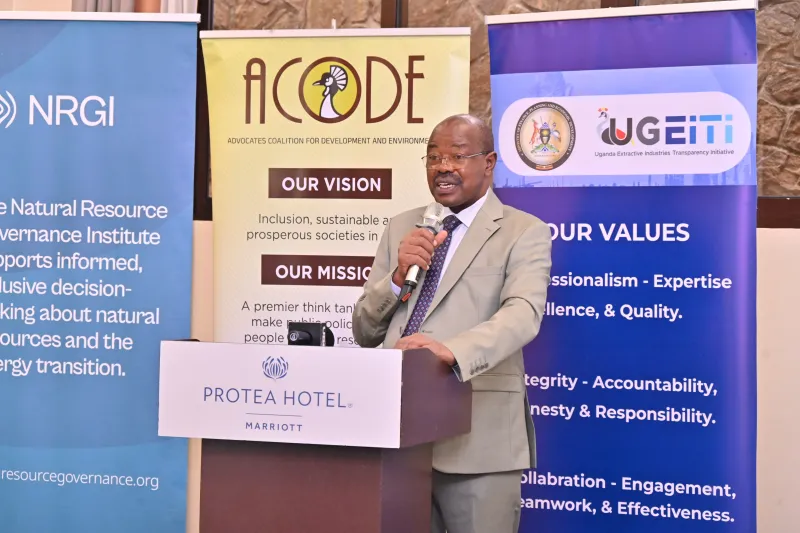



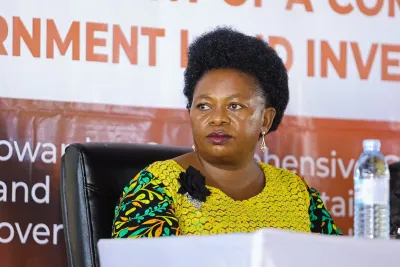
Minister of State for Planning Amos Lugoloobi has challenged stakeholders in Uganda’s extractive industry to strengthen governance, improve revenue collection and promote responsible investment to ensure the country benefits more from its mineral resources.
Lugoloobi said Uganda must do more to maximise the economic value of its natural resources, questioning whether the country was receiving sufficient benefits from minerals before they are exported.
“Are we maximising the value of our mineral resources before they leave the country?” Lugoloobi asked.
He made the remarks while opening the national dissemination of the Fifth Extractive Industries Transparency Initiative (EITI) Report at Protea Hotel in Kampala.
Uganda has published five EITI reports covering the financial years 2019/20 to 2023/24, providing information on the country's extractive sector, including mineral production, exports, company operations and payments to Government.
According to Lugoloobi, Uganda's extractive sector generated approximately Shs663.24 billion in revenue during the 2023/24 financial year, with mining and quarrying contributing Shs336.97 billion.
He said the figures demonstrate the sector's contribution to the economy but also raise questions about whether Government is collecting all the revenue due from companies operating in the industry.
“Are we collecting all the revenues due to Government?” he asked.
The Minister emphasised the need to strengthen revenue administration and improve monitoring of mineral production, exports and company payments to address possible weaknesses in tax compliance, licensing and reporting.
He explained that information generated through EITI reporting gives Government a better understanding of activities within the extractive industry and can help identify possible under-reporting of production and payments.
The information can also support efforts to improve the collection of mineral royalties, corporation tax, withholding tax and surface rentals, which are important sources of Government revenue.
Lugoloobi stressed that transparency in the extractive industry should go beyond the publication of periodic reports, arguing that the information generated must be used to improve economic management and domestic revenue mobilisation.
“EITI should not be viewed simply as a reporting exercise or an obligation to publish periodic reports. It is a governance and economic management instrument that can help Uganda mobilise more domestic revenue and derive greater value from its natural resources,” he said.
The Fifth EITI Report comes amid growing attention to the economic potential of Uganda's mineral resources and the need to strengthen oversight of the sector.
Figures from the 2023/24 reporting period show that the value of mineral production increased by 87 per cent to Shs464.7 billion, up from Shs248.5 billion in the previous financial year. Iron ore accounted for a significant share of the increase, with its production value rising to Shs289.3 billion.
The figures highlight the importance of strengthening systems for monitoring mineral production, trade and revenue collection to ensure that the country's natural resources contribute meaningfully to national development.
The five EITI reports recommend continued efforts to institutionalise reporting, improve the quality and accessibility of extractive-sector data, and strengthen transparency in beneficial ownership and mineral licensing.
They also call for enhanced revenue and financial disclosures, alongside expanded reporting on environmental and climate-related issues.
The recommendations are intended to strengthen accountability and provide Government, companies and the public with better information for monitoring the management of Uganda's natural resources.
Lugoloobi's call places emphasis on ensuring that increased activity in the extractive industry translates into stronger domestic revenue mobilisation and greater economic benefits for Ugandans.



Sunrise reporter
Leave a Comment
Your email address will not be published.