
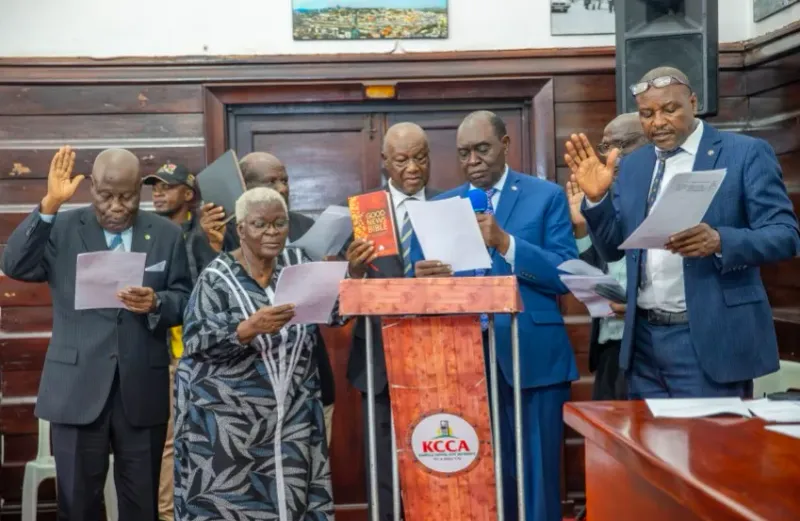




The Kampala Capital City Authority (KCCA) has sworn in newly elected women and older persons council leaders, giving the two special interest groups new representatives to champion their interests and strengthen their participation in the city's development.
The leaders took their oaths of office on Thursday, at the Mayor's Parlour at City Hall, in a ceremony that marked a new chapter in the representation of women and older persons in Kampala's decision-making processes.
The newly elected representatives are expected to mobilise their respective constituencies, raise issues affecting their communities and influence development priorities to ensure that the needs of women and older persons receive greater attention.
However, leaders of the Persons with Disabilities Council are expected to be sworn in during a separate ceremony on another date.
Kampala Lord Mayor Ronald Balimwezo challenged the new leaders to turn their positions into meaningful action by actively mobilising the people they represent and participating in the city's development programmes.
Balimwezo described women and older persons as important pillars of families and communities, noting that their contribution remains essential to Kampala's development.
"Women and the elderly are very important in the development of the city. They are providers for families and strong pillars of society," Balimwezo said.
He pledged to prioritise women's economic empowerment, children's welfare and interventions addressing challenges affecting vulnerable groups.
The Lord Mayor also urged the representatives to work closely with city leadership to advance programmes that improve the welfare of their constituencies.
Representing the KCCA Executive Director, Frank Rusa reminded the newly elected leaders that their positions came with a responsibility to deliver tangible results for the people they represent.
Rusa urged them to understand government programmes, mobilise communities to participate in the initiatives and ensure that intended beneficiaries access the available opportunities.
"Leadership is a calling. Your work is cut out for you. You must understand government programmes, help them succeed and ensure they reach the people they are intended to benefit. Good leadership can transform lives," Rusa said.
KCCA Speaker John Mary Ssebufu called for greater respect for older persons, emphasising the importance of protecting their dignity and recognising their contribution to society.
Deputy Speaker Olive Namazzi, meanwhile, urged the representatives to exercise fairness in their leadership and avoid discrimination, stressing that everyone should be treated equally.
For the newly elected women leaders, strengthening their capacity to understand and execute their responsibilities emerged as an immediate priority.
Sarah Nandawula was sworn in as Chairperson of the Kampala District Women Council, while Susan Zawedde took office as secretary.
Nandawula said equipping women representatives with the necessary skills and knowledge would improve their ability to mobilise women and advocate for issues affecting them.
Caroline Kukunda, the Vice Chairperson of the Kampala District Women Council, also called for induction, training and sensitisation programmes to help the leaders understand their mandate and effectively represent women in their respective communities.
"We need training, induction and sensitisation on what is required of us. We need to be empowered as women," Kukunda said.
Meanwhile, Francis Lubowa was sworn in as Chairperson of the Older Persons Council. He called for increased support for elderly residents and urged city authorities and other stakeholders to prioritise their needs in efforts to build an inclusive Kampala.
The councils provide an important platform through which women, older persons and persons with disabilities can participate in leadership, communicate their concerns and influence policies and programmes affecting their welfare.
Women's councils operate under the National Women's Council Act and the Ministry of Gender, Labour and Social Development, with representation extending from village and parish levels to district, city and national levels.
Their establishment forms part of Uganda's constitutional commitment to affirmative action, which seeks to address historical barriers to representation and ensure that marginalised groups have a voice in decision-making.
The newly sworn-in leaders now face the task of translating their positions into practical initiatives that address the concerns of women and older persons while strengthening their participation in Kampala's development.




Sunrise reporter
Leave a Comment
Your email address will not be published.