


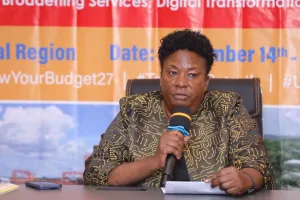



The Deputy Inspector General of Government (DIGG), Anne Twino, has sounded the alarm over rising complacency towards HIV/AIDS among sections of Uganda’s youth, warning that the trend is driving risky sexual behavior and threatening decades of progress in the fight against the epidemic.
Twino made the remarks while delivering the keynote address during the Uganda AIDS Commission Candle Light Memorial Day commemoration held at Kitante Hill Secondary School under the theme: “Ending AIDS by 2030: Embracing the Role of Women.”
She warned that unless urgent interventions are taken, Uganda risks losing the gains it has achieved in combating HIV/AIDS due to growing public indifference.
“In some communities, prevalence is rising again. Risky behavior is increasing. Among sections of the youth, the fear of HIV has unfortunately reduced because treatment is available. Drug and alcohol abuse are increasing vulnerability. Transactional sex is rising. Early sexual activity is becoming normalized,” Anne Twino said.
Twino noted that Uganda’s youthful population remains vulnerable if complacency towards HIV/AIDS continues to spread, adding that the country could lose a generation that is expected to drive economic growth, innovation, and productivity.
She emphasized that complacency weakens prevention and care efforts because many people begin to believe HIV/AIDS is no longer a serious public health threat.
The annual Candle Light Memorial Day is held every third week of May to honor people who have lost their lives to HIV/AIDS and to show solidarity with people living with the virus through candle-lighting activities.
Twino also underscored the importance of empowering women in the fight against HIV/AIDS, saying they remain central to building healthier families and communities.
“Women are not merely participants in the HIV response. Women have been the backbone of the response,” she said.
She described Uganda’s fight against HIV/AIDS as one of the continent’s most remarkable public health success stories, noting that under the leadership of President Yoweri Kaguta Museveni, Uganda gained international recognition for openness, community mobilization, and bold leadership in tackling the epidemic.
According to the Uganda AIDS Commission, AIDS-related deaths declined by 61 percent between 2010 and 2024, dropping from 56,000 to 20,000. During the same period, new HIV infections declined by 45 percent from 94,000 to 37,000.
“These are not merely statistics they are lives saved, families preserved, children given another chance to grow up with parents, and communities restored with hope,” Anne Twino said.
She added that every candle lit should remind the public that HIV/AIDS is no longer a death sentence because treatment works and hope remains stronger than fear.
The chief guest, Hon. Milly Babalanda, said the progress registered in the fight against HIV/AIDS is a result of deliberate government efforts, but warned that complacency among the public is undermining those achievements.
“While we celebrate progress, we must confront the truth with honesty and urgency. Some people are not testing early enough or enrolling for treatment. We must fight this attitude,” Milly Babalanda said.
Dr. Nelson Musoba, the Director General of the Uganda AIDS Commission, said the commission will continue strengthening partnerships that promote the role of women in HIV prevention, care, treatment, and support for people living with HIV.







Sunrise reporter
Leave a Comment
Your email address will not be published.