
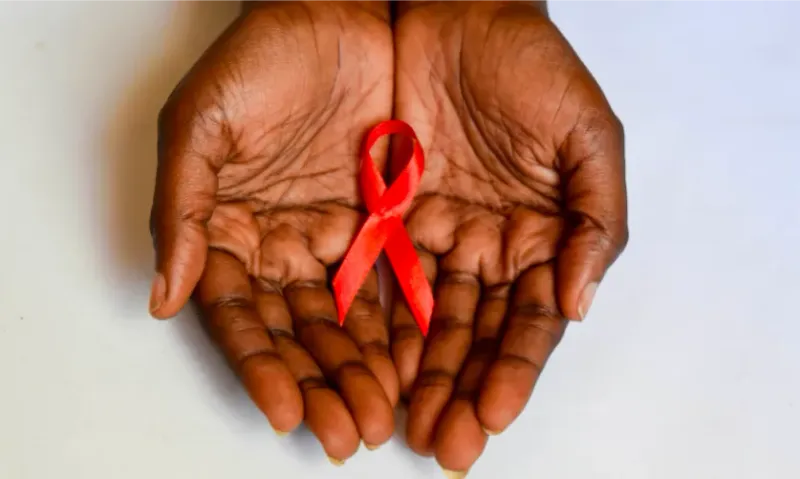




As the world marks World AIDS Day 2025 on 1 December, commemorations take place under the theme “Overcoming disruption, transforming the AIDS response.” This year’s observance comes at a pivotal moment, as decades of hard-won progress face unprecedented strain. While scientific advances and community leadership have equipped the world with the tools to end AIDS as a public health threat, a tightening global environment, marked by shrinking financing, conflict, climate pressures and deepening inequality, now threatens to reverse these gains.
Even before recent upheavals, no country was on track to achieve the #Triple10Targets by 2025, which aim to eliminate stigma, discrimination, gender-based violence, inequalities and punitive laws that hinder access to HIV services. Today, HIV prevention efforts are increasingly disrupted, with new infections rising in several regions, particularly among key populations and their partners. In 2024 alone, an estimated 40.8 million people were living with HIV, 1.3 million newly acquired the virus, and approximately 630,000 died from HIV-related causes.
The crisis has been intensified by significant funding cuts from international donors. Community-led services essential for reaching marginalized groups are being sidelined just as punitive laws targeting same-sex relationships, gender identity and drug use proliferate, further restricting access to prevention, treatment and care. With HIV programmes heavily dependent on external support, the current funding shortfall in 2025 poses a historic threat to global progress.
Yet the response to HIV has always been defined by resilience. From the earliest years of the epidemic, people living with HIV, civil society, health workers and affected communities confronted stigma and reshaped global approaches to health and human rights. That leadership remains central today. Countries such as Namibia and Angola have advanced rights-based reforms that strengthen access to services, while Kazakhstan’s government is expanding support for community-run organizations delivering prevention and legal assistance. In Pakistan, a digital platform co-created with key populations is linking thousands to confidential information, self-testing and care.
Scientific innovation is also opening new pathways forward. Just as antiretroviral therapy transformed the epidemic a generation ago, emerging long-acting HIV prevention methods offer a major opportunity to accelerate the end of AIDS as a public health threat. A landmark partnership to make generic lenacapavir available for US$40 per year across 120 low- and middle-income countries by 2027 demonstrates how collaboration can expand equitable access at scale. Realizing the full potential of such tools, however, will require removing structural barriers, strengthening health systems and ensuring community networks remain central to implementation.
Global health leaders, including WHO, stress that achieving the goal of ending AIDS by 2030 demands sustained political commitment, renewed international cooperation and human-rights-centred approaches. The international community must help bridge the widening financing gap, support countries in restoring and expanding HIV prevention and treatment services, dismantle legal and social obstacles, and empower communities to drive the response.
AIDS is not over, and in today’s environment, a transformative shift is essential. With solidarity, equity and community leadership at the forefront, the world still has an opportunity to protect hard-won gains and accelerate toward a future free of AIDS.





Phillip Baraka
Leave a Comment
Your email address will not be published.