
How a nurse’s training in Korea built an emergency corner—and a steadier hand—at Masaka Regional Referral Hospital
In the maternal and newborn wards of Masaka Regional Referral Hospital, the line between a quiet recovery and a tragedy is often drawn in seconds. This is the story of a nurse who travelled to Korea uncertain at the bedside of the critically ill - and returned able to act. It is also the story of the mothers and children whose lives turned on that change.
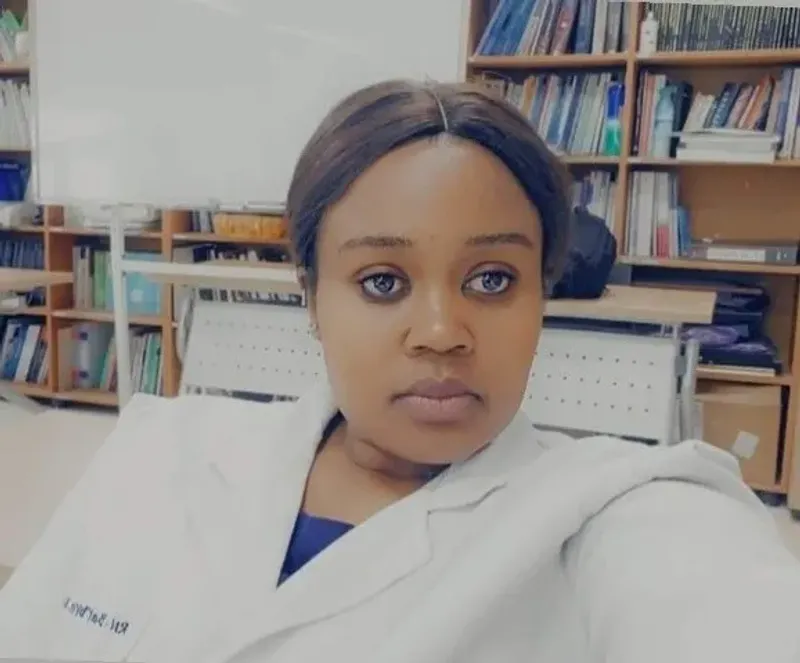
There is a particular silence that falls over a ward when a patient is slipping and the people meant to save them are not yet certain on how to. Kaitesi Barbra knew that silence well.
As a Nursing Officer at the Maternal and Child Health department of Masaka Regional Referral Hospital, she had met it more times than she could count. At the bedside of mothers and newborns whose lives hunged on the next few minutes. She had the will to act. What she did not yet have was all the skill those minutes demanded.
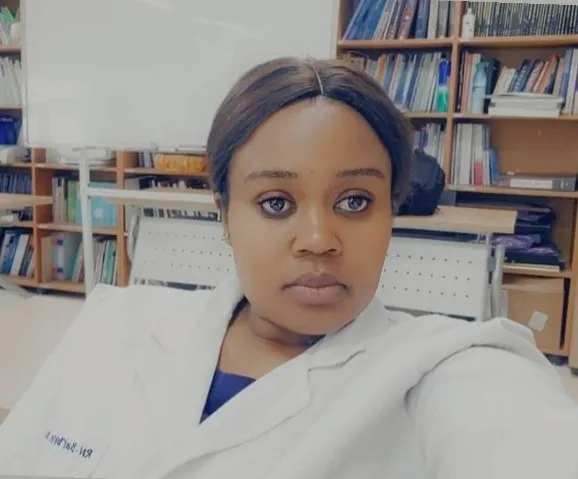
Trained as a general nurse practitioner, Kaitesi had been prepared to care for patients, but not always to rescue them. When breathing failed, when an airway closed, when a trauma case arrived frightened and bleeding, the most advanced interventions could not always begin where they were needed most; at the point of care. Too often the only answer was an urgent referral and a race against a clock that did not wait.
The minutes that could not wait
Before the training, the gaps were not hers alone; they ran through the system around her. Pre-hospital care was thin. Triage was not yet structured enough to separate the critically ill from the generally unwell in the moments that mattered. During an emergency, roles were not always clear, communication faltered, and decisions that needed to be made in seconds often stalled.
For a critically ill patient, those delays are the difference between a heart restarted and a heart that fails; between a mother stabilised and a mother lost. Kaitesi carried the weight of that arithmetic during every shift; the quiet understanding that, in an emergency, hesitation has a cost.
A door opens in Korea
In 2022, things began to change. Kaitesi was selected for the Dr. Lee Jong-wook Fellowship Program for the Clinical Experts Training run by the Korea Foundation for International Healthcare (KOFIH). She travelled to Yonsei University’s Wonju Severance Christian Hospital to learn the emergency medicine skills she had so often wished for at home.
What she found there was not a single technique but a whole way of working. Hands-on, she trained in Basic Life Support, cardiopulmonary resuscitation (CPR), airway management, trauma care and the stabilisation of critically ill patients before referral. She learned to read a patient quickly through structured triage, to assess trauma through the Korea Trauma Assessment and Treatment (KTAT) protocol, and to coordinate pre-hospital care so that the ambulance, emergency department and referral hospital moved as one. She drilled in simulation until acting under pressure became instinct.
“What I learned in Korea has changed how we handle emergencies at the bedside; every second now counts, and every action is guided by evidence-based practice.” - Kaitesi Barbra, Nursing Officer, Masaka Regional Referral Hospital.
More than any single skill, she says, the fellowship gave her something she had been missing at the bedside of the critically ill. Where she had once hesitated, she could now move.
The corner that was not there before
Kaitesi did not leave that certainty in Korea. Back at Masaka Regional Referral Hospital, she set about rebuilding the first, fragile minutes of an emergency.
Her first act was the simplest and the most consequential. She established an emergency corner; a dedicated resuscitation point, stocked with equipment for the critical moments, that had not existed before. For a patient who arrives not breathing, that corner is the difference between care that begins at once and care that begins too late.
She tightened triage for the critically ill to be identified and prioritised faster. She drew her colleagues into clearer roles, steadier communication and joint decisions when seconds counted. She also strengthened how high-risk patients were followed after the crisis had passed, to close the gap between treatment and recovery.
A mother, and a danger almost missed
The change showed itself most clearly in a single patient.
A pregnant mother arrived at the ward; weak, unusually thirsty and tired. The signs were unclear; the kind that, before the training, could easily have been read as ordinary fatigue. But Kaitesi had been taught to look deeper. Drawing on the early-warning assessment skills she had sharpened in Korea, she suspected something beneath the surface and called for a blood glucose test.
The result confirmed it; gestational diabetes which until then had been undiagnosed. Kaitesi moved quickly to ensure patient monitoring support, dietary counselling, close obstetric review with the clinical team, and careful follow-up under home care. A danger that could have ended in fetal distress, a maternal emergency or a complicated delivery was caught in time. This is exactly the kind of quiet rescue the training from Korea made possible.
The skill that multiplied
Kaitesi understood early that a skill held by one nurse helps one ward; a skill shared helps a region.
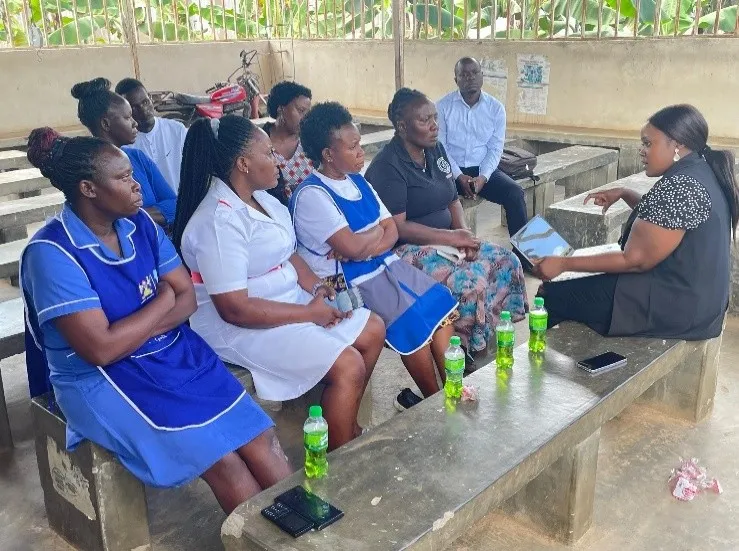
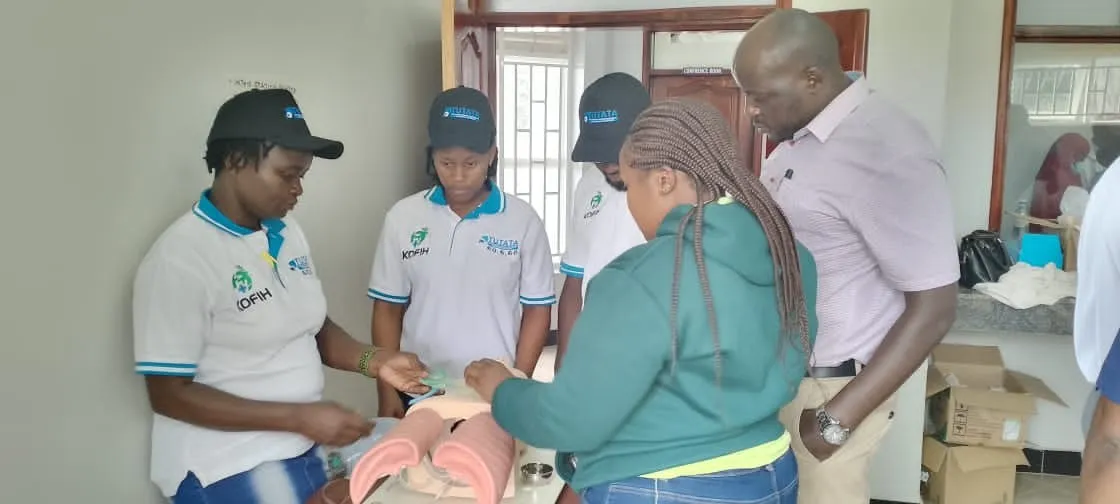
Through on-the-job mentorship and practical demonstrations, she started passing on Basic Life Support, CPR, emergency assessment, airway management and patient stabilisation skills to colleagues at her own hospital and well beyond it. Each session widened the circle of health workers who could deliver emergency manoeuvres more effectively.
The effect reached past any single life saved. There was a stronger teamwork spirit, clearer communication and better patient follow-up; making the whole department more organised and more responsive; steadier kind of care that was felt by the patients.
For Kaitesi, the gratitude runs in one direction.
“Continued investment in such training will not only save lives but also strengthen health systems and improve the quality of care at every level.” - Kaitesi Barbra.
The emergency corner is stocked. The triage is sharper. Colleagues across the region carry skills they did not have before. And in the maternal and child health ward at Masaka Regional Referral Hospital, the silence that once fell over a slipping patient is met now by a nurse who knows exactly what to do—and does it, in the seconds that count.



Sunrise reporter
Leave a Comment
Your email address will not be published.