



Uganda’s district and city local government elections on Thursday were marked by unusually low voter turnout across several parts of the country, leading to delayed opening of polling stations and prompting last-minute mobilization efforts by candidates, citizens, and local authorities ahead of the 4:00 p.m. close of polls.
Across Kampala, Wakiso, Entebbe, Arua City, and Arua District, voting failed to start on time at many polling stations despite the timely delivery of polling materials. Electoral Commission procedures require at least 10 registered voters to be present to witness the opening of polling materials and confirm they have not been tampered with, a requirement that could not be met in several areas during the early hours of the day.
By law, polling is supposed to start at 7:00 a.m., but in many locations voting only commenced after 9:00 a.m. due to the absence of voters. At Kansanga Seed Secondary School in Makindye Division, Kampala, officials struggled to secure the minimum number of voters needed to open polling materials, causing delays similar to those reported at Nakyekoledde Polling Centre in Rubaga Division, Abweru Playground Polling Station, and several polling stations in Nansana Municipality, Wakiso District.
The incumbent Kampala Lord Mayor, Erias Lukwago, described the turnout as the lowest he has witnessed in his lifetime. “This is the lowest voter turnout I have witnessed ever since I started participating in electoral processes, not as a candidate but as a voter. If by 11:00 a.m. polling is supposed to end at 4:00 p.m. and you have not even reached 30 percent turnout, I doubt a miracle will happen in the remaining hours. This is going to be the lowest turnout in the history of electoral processes in this country,” Lukwago said.
In Entebbe, Entebbe Municipality Mayor Fabrice Rulinda noted that turnout was low in the morning but expressed optimism that more voters would participate later in the day.
Similar patterns were observed in West Nile, particularly in Arua City and Arua District, where low voter participation prompted both official and citizen-led mobilization efforts. In more than 30 polling stations visited during the morning hours, voting was delayed due to the absence of some polling agents and the minimum number of voters required to open stations.
At Onduparaka Headquarters polling station, which has over 500 registered voters, only 34 voters had cast their ballots by 11:00 a.m. At Kirabu Diro A–E and F–Z polling stations, with more than 900 registered voters, just 54 had voted by midday, while only 20 voters had turned up by 1:00 p.m. at Eruba Primary School in Arua District.
In response to the low turnout, Richard Job Matua, the Assistant Resident City Commissioner of Arua, and Jonah Mbigitti, the Deputy RCC for Ayivu Division, visited polling stations and appeared on local radio stations urging residents to participate in the elections. Meanwhile, mayoral candidate Lawrence Alionzi Dangote of the National Resistance Movement cast his vote at Isaac Center E–Z polling station at 12:45 p.m. and directed his agents to mobilize voters within the community.
Some voters cited a lack of interest in local government elections as a reason for staying away. At Bazaar East Police Polling Station in Arua City, one voter identified as Mambo said many citizens do not consider local government elections important.
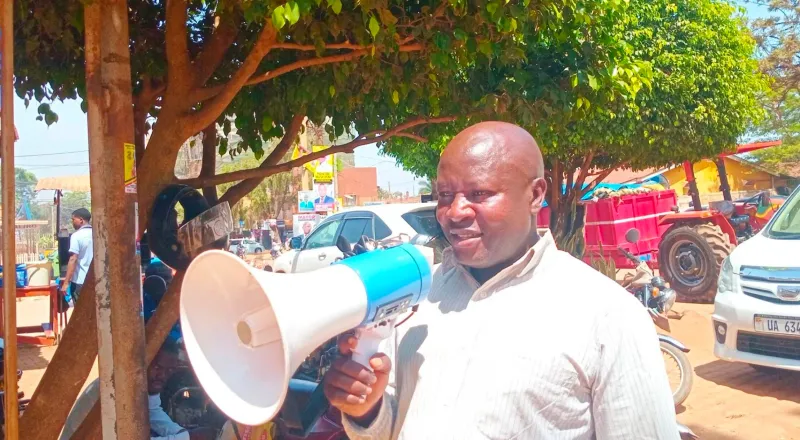
Low turnout was also reported in Kampala’s Makindye West Division, where voter mobilization efforts were led by local leaders and candidates. Deo Genza, a boda-boda rider and Chairperson of the Makindye Division Urban Council Boda-Boda Stage, used a motorcycle-mounted megaphone to rally voters across several parishes after observing deserted polling stations hours after opening.
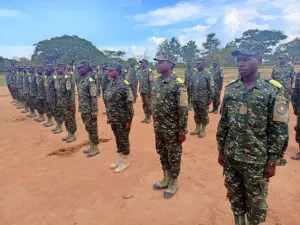
Juma Muwonge, a polling agent for Kampala Lord Mayor candidate Ronald Balimwezo, noted that the presence of security at several polling stations located within barracks discouraged some voters from turning up.
Electoral officials noted that most of the delays experienced during the local government elections were attributed to the absence of voters during the opening hours.
Security remained calm in most parts of the country, including West Nile, according to police. Observers, however, expressed concern that continued low voter turnout could affect public confidence in local governance.

Paul Rubongyera
Leave a Comment
Your email address will not be published.