
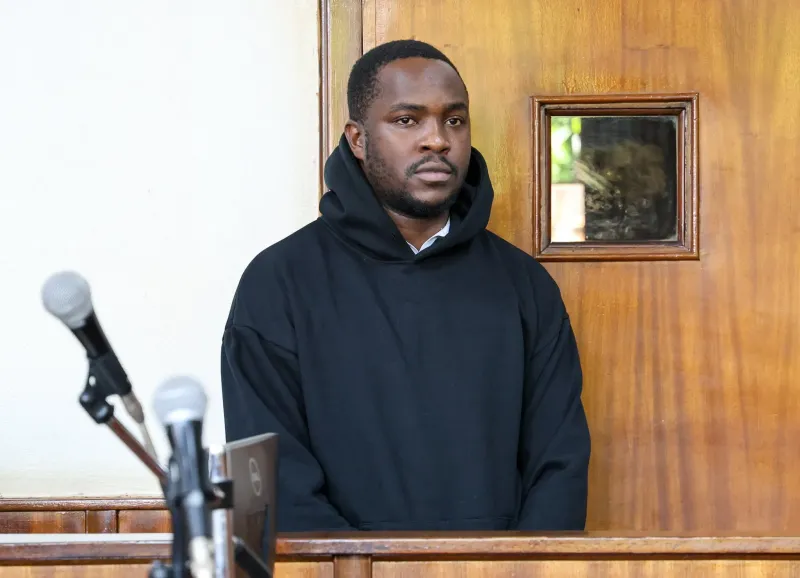

A businessman, Male Nicholus, has been convicted and sentenced to 18 months’ imprisonment on each of seven counts of forgery and uttering false documents after pleading guilty before the Buganda Road Chief Magistrate’s Court.
The sentences will run concurrently, meaning they will be served at the same time.
According to the Anti-Corruption Unit – State House Uganda, the conviction followed investigations by the Anti-Corruption Unit and the Criminal Investigations Directorate (CID), with prosecution led by the Office of the Director of Public Prosecutions (ODPP).
The case stems from an incident on September 18, 2025, when Male allegedly presented a forged letter dated August 15, 2025, addressed to the Minister of Works and Transport and purportedly signed by the President of the Republic of Uganda.
The letter falsely claimed that the President had directed the minister to renew Nation Oil Distributors Limited’s contract to manage MV Kalangala for a further 15 years.
Male allegedly delivered the letter to the Ministry of Works and Transport, the Ministry of Justice and Constitutional Affairs, and the offices of Nation Oil Distributors Limited in Ndeba.
Investigations further established that Male had earlier presented himself to the director of Nation Oil Distributors Limited as someone working with the Office of the Prime Minister (OPM). He also claimed to have connections with senior government officials who could facilitate the renewal of the company’s contract to manage MV Kalangala.
The court described his conduct as a serious disregard for authority and an abuse of the person and office of the President.
It further observed that offences involving forged presidential documents could damage the President’s reputation and encourage similar fraudulent activities, including schemes aimed at obtaining money from unsuspecting members of the public.
The court also noted that Male had forged appointment letters in the names of several individuals, falsely presenting them as documents issued by the Office of the Prime Minister. The forged letters were found to have the potential to undermine public confidence in government institutions.
The conviction highlights the legal consequences of forging official government documents and falsely claiming connections to senior public officials to influence government decisions.


Sunrise reporter
Leave a Comment
Your email address will not be published.