


The National Water and Sewerage Corporation (NWSC) has assured residents of the Greater Kampala Metropolitan Area of improved water supply and the restoration of roads affected by ongoing water network construction works.
The assurance comes as the corporation advances its major water network rehabilitation, restructuring, rezoning and extension project, which is expected to address persistent water distribution challenges and improve access to reliable water services in Kampala and surrounding communities.
According to NWSC, the project is intended to address limitations in the existing distribution infrastructure that have prevented residents from fully benefiting from water produced at the Katosi Water Treatment Plant.
The plant has a production capacity of 160 million litres per day, but only about half of that capacity is currently being supplied through the existing network due to distribution constraints.
Through the ongoing project, NWSC aims to expand the transmission and distribution infrastructure to enable more treated water to reach communities experiencing shortages and inadequate supply.
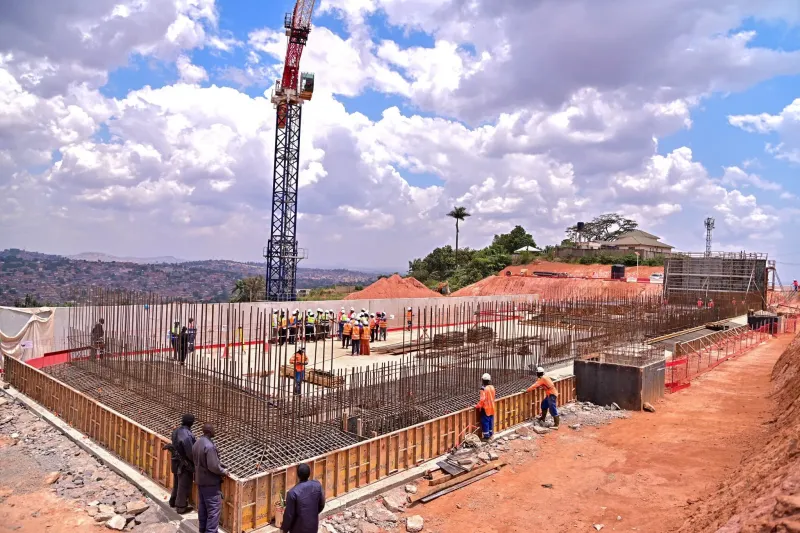
The works include laying approximately 69 kilometres of transmission mains, constructing water reservoirs at Kanyanya, Kabulengwa and Mutungo, establishing booster stations at Kungu and Kabulengwa, and upgrading the Supervisory Control and Data Acquisition (SCADA) system across major installations.
The expanded infrastructure is expected to improve water supply reliability, reduce shortages and extend services to up to one million additional people.
Among the areas expected to benefit are Kira, Kasangati, Namugongo, Buwaate, Bulindo, Mulawa, Gayaza, Matugga, Kawempe, Nansana and Wakiso, alongside neighbouring communities.
NWSC says the expanded water network is being designed to accommodate the growing demand for water in Greater Kampala through 2040, as urbanisation and population growth continue to increase pressure on existing infrastructure.
Although the overall project is scheduled for completion in August 2027, the corporation says some sections will be completed and commissioned earlier to allow residents in targeted areas to begin benefiting before the entire project is finalised.
The Namugongo–Kasangati pipeline is scheduled for commissioning in January 2027. Its completion is expected to improve water supply to communities along the corridor and surrounding areas.
The corporation has also addressed concerns raised by residents over the disruption caused by excavations, pipe-laying activities and other construction works, particularly on roads and in residential neighbourhoods.
NWSC has assured affected communities that reinstatement of damaged infrastructure forms part of the project and that contractors have been directed to restore affected roads, verges, walkways and other areas properly and promptly.
Road and infrastructure reinstatement is expected to commence in November 2026, with some gravel road sections already undergoing restoration following the completion of pipe-laying and testing activities.
The exercise will continue in phases as construction activities are completed in different sections of the project area.
The corporation is also working with municipal authorities and the Ministry of Works and Transport to coordinate the restoration works and prioritise utility corridors to minimise future damage and disruption.
NWSC has reaffirmed its commitment to restoring affected infrastructure to its original condition or better, while appealing to residents to remain patient as contractors complete the ongoing works.
The project, formally known as the Rehabilitation, Restructuring, Rezoning and Extension of the Greater Kampala Metropolitan Area Water Supply Network Project, is a major investment in strengthening the region's water distribution infrastructure.
Its successful completion is expected to improve the delivery of treated water from Katosi, extend access to underserved communities and support the growing water needs of Greater Kampala and neighbouring areas.
The project is part of the wider Package 2B water network expansion programme, which began in February 2025. It is principally financed by the French Development Agency, with support from the European Union, the European Investment Bank and Germany's KfW. The works are being undertaken by Sogea-Satom.




Sunrise reporter
Leave a Comment
Your email address will not be published.