



The Government of Uganda has opened applications for non-repayable business grants of up to Shs111 million to support women-owned enterprises seeking to expand their operations, improve productivity and create employment opportunities.
The funding is being offered under the Business Plan Competition Grant facility of the Generating Growth Opportunities and Productivity for Women Enterprises (GROW) Project, a government initiative implemented through the Ministry of Gender, Labour and Social Development with support from the World Bank.
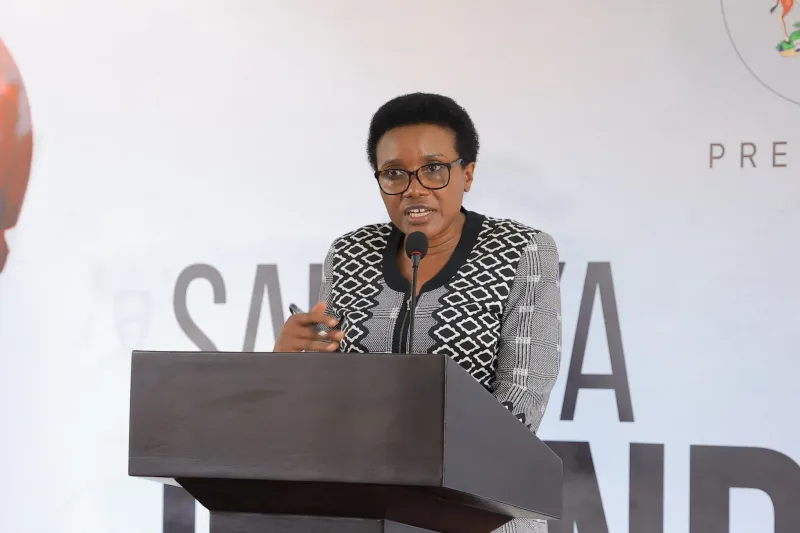
Minister of State for Gender and Cultural Affairs, Mary Kuteesa Kamuli, announced the opening of the application window on Tuesday, during a media briefing at the Uganda Media Centre in Kampala.
Under the programme, eligible micro-enterprises employing up to four workers can access grants ranging from Shs3.5 million to Shs38 million, while small enterprises employing between five and 49 workers can qualify for funding ranging from Shs37 million to Shs111 million, according to the minister's announcement.
Unlike conventional business loans, the grants are non-repayable, although successful applicants will be required to meet agreed performance targets and comply with the programme's implementation requirements.
The initiative is intended to help women entrepreneurs overcome financial barriers that often limit business expansion, particularly difficulties accessing conventional financing and meeting commercial lending requirements.
The GROW Project aims to help women-owned businesses transition from micro to small enterprises and from small to medium-sized businesses through improved access to financing, business development services and entrepreneurial support.
To qualify for the Business Plan Competition Grants, businesses must be at least 51 per cent owned by Ugandan women or legally registered women refugees operating in Uganda. They must also have been in operation for at least 12 months and have a verifiable physical business location.
Applicants are required to provide evidence of business activity, which may include bank statements covering 12 months or mobile money statements covering at least six months. The official applicant guidance also outlines supporting documents relating to business registration, ownership, identity and the period of business operation.
The competition targets enterprises with potential for expansion, innovation, employment creation and increased productivity.
Priority sectors include agribusiness and food processing, green businesses and renewable energy, construction, manufacturing, Science, Technology, Engineering and Mathematics (STEM), information and communication technology (ICT), arts and creative industries, social enterprises and childcare services for children aged zero to three years.
Eligible business expansion activities include purchasing specialised machinery and equipment, improving production capacity, introducing digital technologies, developing new products, training employees and accessing new markets.
The programme also seeks to encourage women's participation in sectors where they have traditionally faced barriers, including technology, construction and other technical industries.
The Ministry has particularly encouraged applications from women with disabilities, legally registered refugee women, entrepreneurs in refugee-hosting districts and vulnerable and marginalised communities, including the Batwa, Tepeth, Ik and Benet.
However, women entrepreneurs who have previously borrowed under the GROW Loan facility are not eligible for the Business Plan Competition Grants.
Other exclusions include political institutions, government ministries, departments and agencies, environmentally or socially harmful activities and specified routine business ventures such as general market vending, basic hair salons, event planning and subsistence farming.
Shortlisted applicants will undergo due diligence, business assessments and physical verification before successful candidates sign Performance-Based Grant Agreements with the Ministry.
The grants are expected to be implemented over nine months, with the programme initially scheduled to run until September 2027.
Women entrepreneurs can submit applications through the official GROW Project website at grow.go.ug or the GROW Management Information System at mis.grow.go.ug. Applications are also available through the GROW Uganda mobile application on Google Play Store.
Applicants are encouraged to prepare their business information, ownership records, financial statements, proposed expansion activities and supporting documents before completing the online application.
The Ministry has also urged women who need assistance to contact GROW Project Focal Point Persons at district, city and municipal headquarters.
Meanwhile, the Government has reported progress under a separate GROW programme targeting improvements in workplace infrastructure for women.
According to Kamuli, 193 institutions have been selected to benefit from UGX105.42 billion, equivalent to approximately USD26.36 million, under the Gender-Inclusive Workplace Infrastructure Grants.
The programme follows a pilot launch by President Yoweri Kaguta Museveni on May 1, 2025, during International Labour Day celebrations in Nakapiripirit District, where 10 institutions received awards.
A subsequent competitive application process conducted between February 11 and April 2, 2025, attracted 1,194 applications. Following evaluation and approval by the World Bank and the Office of the Solicitor General, 193 institutions were selected against a project target of 217.
The selected institutions are spread across Uganda, with 57 in Northern Uganda, including Karamoja, 46 in Western Uganda, 45 in Eastern Uganda and 44 in Central Uganda.
The infrastructure funding will support the construction, improvement and equipping of shared workplace facilities, including working and storage spaces, safe water and sanitation facilities, childcare and breastfeeding spaces, workplace lighting and business equipment.
Beneficiaries include women's associations, cooperatives, community-based organisations, non-governmental organisations, faith-based organisations, social enterprises, business incubation centres, local governments and institutions operating in refugee-hosting districts.
The grants will be governed by Performance-Based Grant Agreements and the Public Finance Management Act, with disbursements linked to verified implementation milestones.
The Ministry plans to engage the 193 beneficiary institutions and their respective district leaders to explain implementation procedures, accountability requirements and supervision responsibilities.
Kamuli called on district leaders, commercial officers, community development officers and Women Entrepreneurship Platforms to mobilise eligible women entrepreneurs to apply for the business grants.
She also urged local government leaders to ensure proper supervision, accountability and value for money in implementing the workplace infrastructure projects.
The Minister further warned applicants against fraudsters using fake websites, social media accounts and misleading links to solicit money or personal information.
She emphasised that all GROW Project products and services are provided free of charge, cautioning women entrepreneurs against paying registration fees, bribes or facilitation money to access application forms, secure shortlisting or obtain grants.
Applicants are advised to use the official websites, grow.go.ug and mis.grow.go.ug, and the Ministry's website, mglsd.go.ug, to verify information.
Suspected fraud can be reported through the GROW toll-free line, at the nearest police station or at the GROW Project offices on the third floor of Gender and Labour House, Plot 2 George Street, Kampala.





Sunrise reporter
Leave a Comment
Your email address will not be published.