





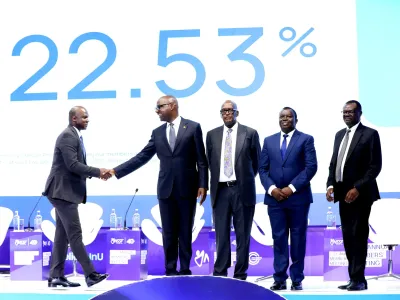
The Uganda Bureau of Statistics (UBOS) has released the Uganda Malaria Indicator Survey (UMIS) 2025, providing essential data on malaria prevalence, prevention, and treatment across the country. According to the survey, malaria prevalence has risen to 13% in 2024–2025, up from 10% in 2018–2019, highlighting the need for continued public health interventions and targeted malaria control programs. The survey examines trends in prevention, treatment practices, and national efforts to reduce malaria, and serves as a critical tool for evidence-based policy decisions and resource allocation in Uganda’s health sector.
Data for UMIS 2025 was collected using digital technology platforms to ensure accuracy, efficiency, and timely reporting. UBOS commended the professionalism and dedication of nurses, health technicians, supervisors, and field staff who carried out the survey nationwide, noting that their work was instrumental in producing reliable statistics for policymakers and stakeholders.
The survey also highlights ongoing international support in malaria control. Dr. Kasonde Mwinga, World Health Organization Uganda Country Representative, emphasized the United States’ continued contribution, including the distribution of 2.6 million insecticidal mosquito nets, 4.5 million rapid diagnostic tests, 2.2 million treatment doses for uncomplicated malaria, and 200,000 doses for severe malaria. In addition, indoor residual spraying campaigns funded in seven districts of Eastern Uganda are protecting nearly 2.9 million people. The launch coincided with the signing of a five-year, $2.3 billion health Memorandum of Understanding (MOU) between the U.S. and Uganda, reinforcing collaborative efforts to strengthen health systems and malaria prevention programs.
Dr. Chris N. Mukiza, UBOS Executive Director, stated that the survey findings will guide policy decisions, program planning, and resource allocation, urging stakeholders to use the data to implement effective malaria prevention and treatment strategies. UBOS Board Chair Albert Byamugisha highlighted progress in Uganda’s health sector, including reductions in under-five mortality, improved infant survival, and declining maternal mortality, attributing these gains to sustained investment, sound policy, and collaboration with development partners.
UMIS 2025 is the first of eight statistical products scheduled for release between March and May 2026. These reports are designed to provide timely, accurate, and actionable data to inform national planning, strengthen health interventions, and guide evidence-based strategies to reduce the malaria burden. By providing comprehensive insights on prevention, treatment, and policy effectiveness, the survey is expected to play a crucial role in Uganda’s ongoing fight against malaria and support the nation’s goal of improved public health outcomes.






Sunrise reporter
Leave a Comment
Your email address will not be published.