



Uganda and Tanzania have agreed to accelerate major energy, railway and trade projects in a renewed push to strengthen bilateral relations, improve regional connectivity and promote economic integration in East Africa.
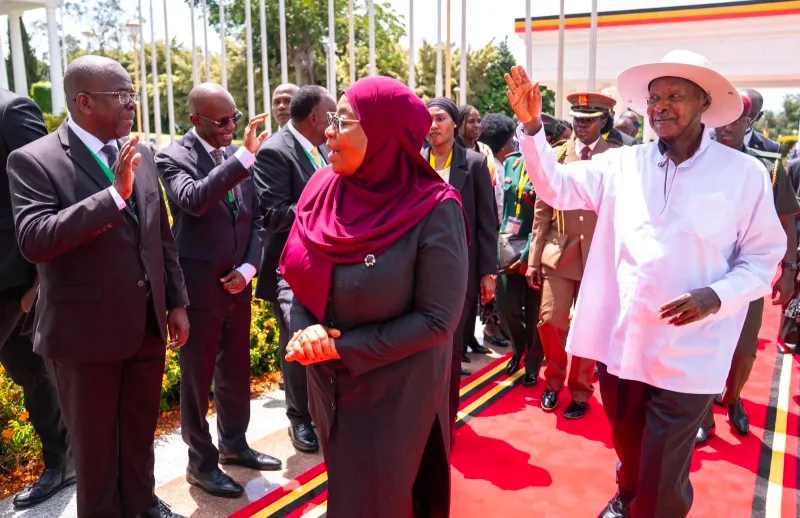
The commitments were reached during a two-day State Visit to Uganda by Tanzanian President Samia Suluhu Hassan, who held bilateral talks with President Yoweri Kaguta Museveni at State House, Entebbe, on November 18 and 19, 2026.
In a joint communiqué issued at the conclusion of the visit, the two countries reaffirmed their longstanding friendship and strategic partnership, identifying energy cooperation, infrastructure development, railway connectivity, trade, investment, regional integration, peace and security as key priorities.
One of the major areas of cooperation is the East African Crude Oil Pipeline (EACOP), which the two Presidents said had reached 93.9 per cent completion. They called for the remaining construction works, testing, commissioning and operational preparations to be expedited to enable the transportation of Uganda's crude oil to the Tanzanian coast.
The leaders described EACOP as a flagship regional infrastructure project with the potential to strengthen energy security, attract investment, create employment opportunities and accelerate economic development in Uganda, Tanzania and the wider East African region.
Beyond crude oil transportation, the two countries want to develop a wider regional petroleum industry through joint investments in refining, storage, distribution and other value-addition activities.
They called for accelerated implementation of the August 2026 Memorandum of Understanding on developing Tanga into a Regional Energy Hub. The proposed hub will include petroleum storage, refining, trading, distribution and logistics infrastructure.
The partnership will also explore joint ventures in the production of fertilisers, plastics, industrial chemicals and other petroleum-based products, with the aim of increasing local value addition and supporting industrialisation.
Uganda and Tanzania further prioritised the development of natural gas and refined petroleum products pipelines, alongside the proposed 400kV electricity interconnector linking Wobulenzi, Masaka, Ibadakuli and Shinyanga.
The electricity project is expected to strengthen cross-border power connectivity, improve regional energy security and support electricity trade between the two countries.
Railway development also featured prominently in the discussions, with the two Presidents welcoming the signing of a Framework Agreement for the Isaka–Lusahunga–Murongo/Kikagati–Mpondwe Standard Gauge Railway (SGR) project.
The railway is intended to improve transport connections between Uganda and Tanzania, facilitate cross-border trade, reduce transportation and logistics costs and strengthen regional economic integration.
The two leaders directed their respective ministries, railway authorities and relevant institutions to expedite feasibility studies, technical designs, financing arrangements and other preparatory activities required to advance the project.
They emphasised the importance of closer coordination and joint resource mobilisation to ensure the railway project moves towards implementation.
The two countries also agreed to improve Port Bell infrastructure and strengthen its railway connection to Kampala to enhance transport services on Lake Victoria.
The improvements are expected to increase cargo-handling capacity, support multimodal transport and facilitate the movement of goods and passengers between Uganda, Tanzania and other parts of the region.
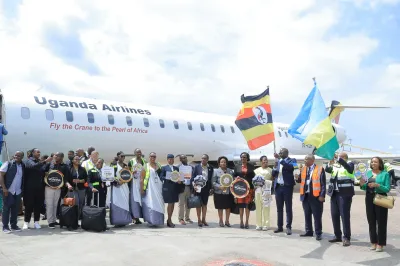
Tanzanian President Samia also announced plans for the MV Mwanza vessel to operate between Mwanza and Port Bell. According to Uganda Broadcasting Corporation, the vessel has a capacity of 400 metric tonnes of cargo and 1,200 passengers.
Tanzania is also modernising the ports of Dar es Salaam and Tanga while expanding its railway network as part of efforts to improve regional trade and transport connectivity.
On trade and investment, President Museveni and President Samia committed to promoting balanced and mutually beneficial economic relations by expanding market access, diversifying traded goods and services, encouraging value addition and strengthening private-sector partnerships.
However, the two leaders expressed concern over persistent Non-Tariff Barriers (NTBs), which continue to affect the movement of goods and services between the neighbouring countries.
They noted that such barriers increase the cost of doing business, undermine competitiveness and limit the benefits of regional integration.
The Presidents directed relevant ministries and government agencies to urgently resolve outstanding trade barriers through dialogue and established bilateral and East African Community mechanisms.
They also emphasised the establishment of a Tanzania–Uganda Joint Trade Committee to provide a platform for addressing trade-related challenges and improving cooperation between businesses in the two countries.
The leaders recalled the outcomes of the Fifth Session of the Uganda–Tanzania Joint Permanent Commission held in Tanzania in March 2026 and directed relevant institutions to accelerate the implementation of outstanding commitments in energy, infrastructure, transport, trade, investment and tourism.
Cooperation in peace and security was another important component of the discussions. Uganda and Tanzania reaffirmed their commitment to working through the East African Community (EAC), African Union (AU), Intergovernmental Authority on Development (IGAD) and United Nations to promote peace, stability and regional security.
They expressed concern over persistent conflicts, terrorism and political instability in different parts of Africa and the world, emphasising dialogue, diplomacy and peaceful resolution of disputes.
The two governments also committed to strengthening cooperation in public health, particularly disease surveillance, information sharing, cross-border preparedness and response, and health systems resilience.
They further emphasised the importance of equitable access to vaccines, medicines and other essential health commodities in addressing public health emergencies.
During the discussions, President Museveni commended President Samia for her continental responsibilities, particularly her roles as African Union Champion for Child and Maternal Health, Women and Youth in Trade under the African Continental Free Trade Area (AfCFTA), and Clean Cooking.
Museveni pledged Uganda's support for her initiatives and recognised their importance in advancing development priorities across the African continent.
The two Presidents also called for reforms of the United Nations system to make global institutions more representative, democratic and responsive to contemporary challenges.
In particular, they supported more equitable African representation on the United Nations Security Council in line with the Ezulwini Consensus and the Sirte Declaration, which outline Africa's common position on UN reforms.
At the conclusion of the State Visit, President Museveni and President Samia expressed satisfaction with the outcomes of their discussions and reaffirmed their commitment to translating the agreements into practical actions.
The commitments signal a renewed push by Uganda and Tanzania to strengthen their strategic partnership through shared infrastructure, energy development, trade expansion and regional cooperation, with both countries seeking greater economic benefits from their geographical proximity and complementary resources.



Sunrise reporter
Leave a Comment
Your email address will not be published.