
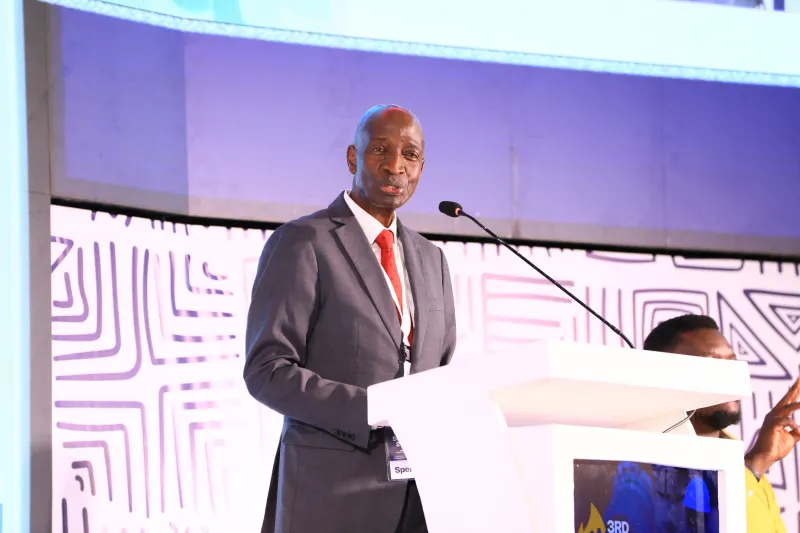





The 3rd Oil & Gas Skills Expo 2026 has officially commenced at the Makerere University, bringing together key stakeholders in Uganda’s energy, education, training, and employment sectors under the theme: “From Oil and Gas to the Wider Economy: Transferable Skills Driving Sustainable Growth.”
The Expo comes at a critical moment as Uganda advances toward the commercial production phase of its petroleum sector, with leaders emphasizing the importance of ensuring that skills developed in oil and gas are effectively transferred to other areas of the economy.
Strong Link Between Oil Industry and Skills Development
Speaking at the event, Prof. Juma Kasozi, Dean of the School of Natural Sciences at Makerere University, highlighted the significant contribution of Uganda’s petroleum sector to academic and technical training.
He noted that the oil and gas industry has supported universities through training of trainers, provision of modern equipment, and access to research datasets, enabling institutions to produce a skilled workforce contributing directly to the petroleum sector.
“Makerere University has greatly benefitted from Uganda’s oil and gas industry, through training of trainers, provision of modern training equipment, and access to vital research datasets. These investments have enabled us to produce a highly skilled workforce that is now contributing directly to the petroleum sector," remarked Prof. Juma.
Over 14,000 Ugandans Trained in Oil and Gas Skills
According to the Petroleum Authority of Uganda (PAU), more than 14,000 Ugandans have been trained through institutions including Makerere University, Uganda Petroleum Institute Kigumba, Kyambogo University, Mbarara University, and several technical training centers and private institutions.
These programs have embedded critical industry competencies such as; Heavy Goods Vehicle (HGV) driving, Welding and fabrication, Health, Safety and Environment (HSE) training, Scaffolding and industrial support skills.
PAU Executive Director Ernest Rubondo also noted that several institutions have achieved internationally recognized certifications, including OPITO, EICTB, and City & Guilds, strengthening Uganda’s technical training ecosystem.
Oil Sector Employment Surpasses 200,000 Jobs
The petroleum sector’s contribution to employment continues to expand significantly. By the end of 2025, direct employment had grown to over 21,000 jobs, while indirect and induced employment has pushed the total economic impact to nearly 200,000 jobs.
PAU reports over 21,000 direct jobs in the sector, around 50,000 indirect jobs through supply chains, transport, and services, approximately 140,000 induced jobs driven by wider economic spending.
This demonstrates the petroleum industry’s growing role in Uganda’s broader economic development and income generation.
Skills Transfer Key to Future Economic Growth
Despite these gains, officials emphasized that skills transfer does not happen automatically. Ernest Rubondo stressed the need for deliberate interventions, including structured training, certification, and coordinated knowledge sharing to ensure workers can transition into other sectors as industry demand evolves.
Government Policy Focus on Workforce Readiness
Speaking on behalf of the Minister of Energy and Mineral Development, Ms. Grace Tusiime highlighted government commitment to sustainable petroleum development.
She referenced the recently launched National Petroleum Policy 2025, which prioritizes; Skills development and workforce readiness, Technology transfer and innovation, Digital skills and environmental stewardship, Stronger collaboration between industry and academia.
She noted that these priorities align closely with the objectives of the Expo and Uganda’s broader industrial transformation agenda.
Preparing for Transition to Production Phase
Keynote speaker Prof. Augustine Ifelebuegu emphasized that Uganda must adopt a deliberate strategy to ensure petroleum-sector skills remain relevant across the economy.
He noted that as Uganda transitions from construction to operations, workforce demand in the oil sector is expected to decline, making transferable skills essential for long-term employment stability.
He also observed that while oil and gas will remain a major global energy source for the next 50–70 years, Uganda must proactively prepare its workforce for evolving industry needs and cross-sector opportunities.
Expo Focus Areas
The 2026 Expo places strong emphasis on; Workforce readiness for the operations phase, Strategic research and innovation, International accreditation and certification, Emerging employment opportunities, Career development pathways in energy and beyond.
The Oil & Gas Skills Expo 2026 underscores Uganda’s strategic push to transform petroleum sector investments into broader economic value. With thousands already trained and hundreds of thousands of jobs created directly and indirectly, stakeholders agree that the next phase will depend on how effectively Uganda converts oil and gas expertise into transferable skills that support national development beyond the energy sector.






Marlene Luwedde
Leave a Comment
Your email address will not be published.