
Uganda’s economy remained stable during and after the general elections, according to the Post-Election Economic and Fiscal Update published by the Ministry of Finance, Planning and Economic Development.
The report was released in line with the Public Finance Management Act (PFMA) Cap 171, which requires the Finance Minister to publish a post-election economic and fiscal update within four months after polling day for a general election.
According to the report, most macroeconomic indicators remained consistent with estimates contained in the Pre-Election Economic and Fiscal Update.
Government said the domestic economy continues to show resilience despite a difficult global economic environment marked by subdued global growth, geopolitical tensions, and volatile commodity markets.
Economic growth for the Financial Year 2025/26 is projected at 6.6 percent, supported by high-frequency indicators that point to continued strengthening of domestic economic activity during the third quarter of the financial year.
The report further noted that inflation remained low and stable, while Uganda’s external position improved due to increased export earnings and sustained foreign exchange inflows from tourism, foreign direct investment (FDI), and remittances.
Government said the developments reflect continued progress in implementing the Fourth National Development Plan (NDP IV), which aims to increase household incomes and improve the quality of life of Ugandans.
The update also aligns with the government’s Ten-Fold Growth Strategy, which targets expanding Uganda’s economy to USD 500 billion by 2040 through strategic investments in productive sectors, infrastructure development, and human capital enhancement.
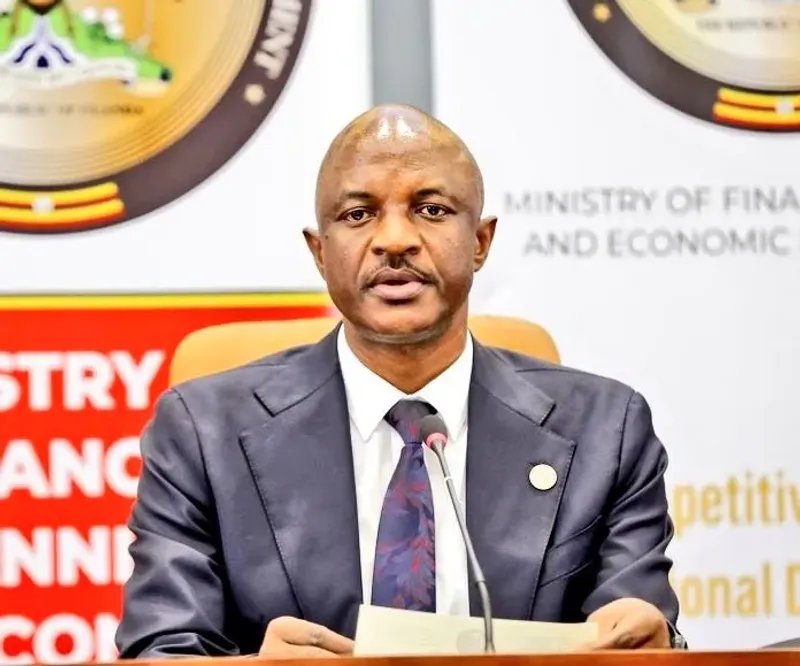
According to Dr. Ramathan Ggoobi, the Permanent Secretary and Secretary to the Treasury (PSST), who is also serving as Acting Finance Minister, the successful conclusion of the general elections provides an opportunity for government to strengthen the efficiency and effectiveness of fiscal policy to increase productivity and accelerate socioeconomic transformation.
Dr. Ggoobi said government will continue prioritizing investments in Agro-industrialization, Tourism, Mineral-based development including oil and gas, and Science, Technology and Innovation (ATMS), alongside the continued rollout of the Parish Development Model (PDM).
“As we continue to set the economy on a Tenfold Growth Trajectory, we are mindful of fiscal and debt sustainability. Therefore, Government will focus on improving domestic revenue mobilization and efficiency of public expenditure to achieve self-sustaining and inclusive growth,” Dr. Ggoobi said.

The Sunrise Editor
Leave a Comment
Your email address will not be published.