
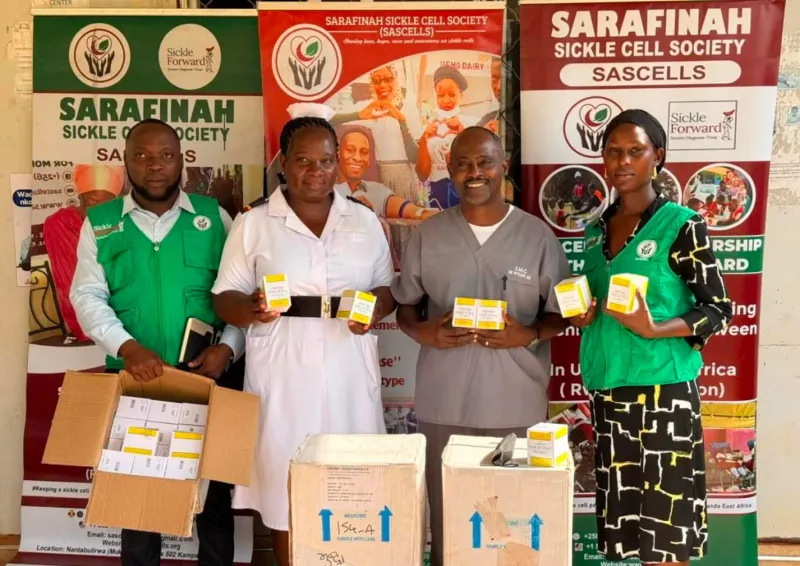


Sarafinah Sickle Cell Society (SASCELLS), in collaboration with the US-based organisation Sickle Forward through the Sickle Cell Unity Mission 2026, has begun distributing free hydroxyurea to children and families affected by sickle cell disease in five Ugandan districts. The initiative aims to reduce hospitalisations, improve care, and ease the financial burden on vulnerable households living with the condition.
A total of 113,000 hydroxyurea capsules are being provided to Buvuma, Buikwe, Ntoroko, Hoima, and Mukono districts. The first phase benefits Mukono, Hoima, and Ntoroko, with each district receiving 1,130 packets containing 100 capsules each. Hydroxyurea is widely recognised as a leading medication for managing sickle cell disease, helping to prevent complications and improve quality of life for children living with the condition.
According to SASCELLS Chief Executive Officer Sarafinah Bukirwa, the medicine works by transforming the abnormal sickled red blood cells into a more normal biconcave shape, which improves blood circulation, oxygen delivery, and nutrient transport throughout the body. She emphasised that despite its effectiveness, access to hydroxyurea remains a major challenge, particularly in rural and hard-to-reach areas.
Each hydroxyurea capsule costs between 50 and 75 US cents, approximately 1,800 Uganda shillings, and many children require more than three capsules a day. For families relying on the medication, the expense is often unaffordable, and limited availability on the local market, due to its short shelf life, further complicates access.
Under this programme, SASCELLS and its partners will provide hydroxyurea free of charge for three months. Bukirwa noted, “This is a lifetime medication. We are appealing to government, communities and development partners to come on board because sickle cell patients need continuous care, just like people living with HIV, tuberculosis or cancer.” The initiative offers temporary relief for caregivers but highlights the urgent need for long-term solutions to ensure sustainable access to treatment.
In addition to providing medication, SASCELLS recently donated three chemistry analyzers to selected districts to strengthen diagnostic capacity. These machines allow health facilities to conduct essential tests, including liver and kidney function assessments, cholesterol and lipid profiling, and other blood investigations necessary for children with sickle cell disease. Children are tested before starting hydroxyurea to ensure safe and effective care.
The five districts were chosen because they are part of the newborn sickle cell screening programme launched in 2025. Bukirwa explained that SASCELLS is committed to connecting children identified through screening to treatment rather than leaving them undiagnosed and without care.
At Mukono General Hospital, Principal Nursing Officer Sister Alex Namara welcomed the support, saying the donation would ease the financial burden on families and improve access to critical sickle cell care. Health experts argue that making hydroxyurea widely available and free of charge in public health facilities is crucial to improving survival rates and quality of life for people living with sickle cell disease in Uganda.
URN





Sunrise reporter
Leave a Comment
Your email address will not be published.