
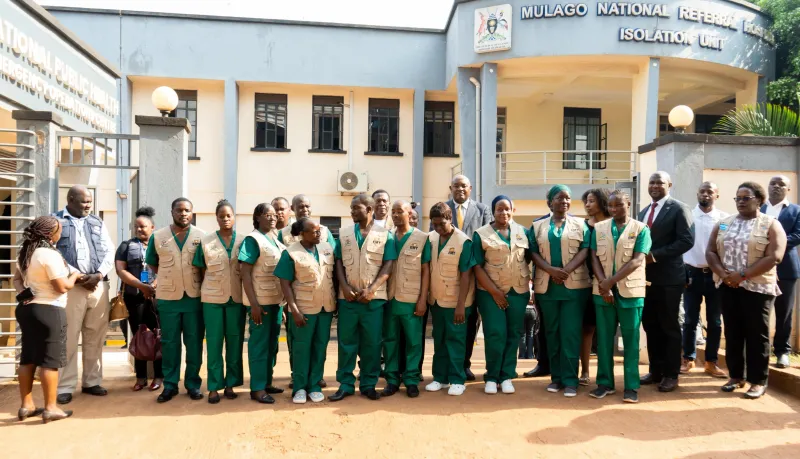

Uganda has reached a significant milestone in its response to the Ebola disease outbreak after the last patient receiving treatment at the Mulago National Referral Isolation Centre was discharged, the Ministry of Health has announced.
The patient, a Congolese national who sought treatment in Uganda after developing symptoms consistent with Ebola while in the Democratic Republic of Congo (DRC), made a full recovery and was officially discharged by the Minister of Health, Dr. Chris Baryomunsi.
Despite the recovery, the Ministry emphasized that the outbreak is not yet over. Uganda has now entered the internationally recommended 42-day countdown required before the outbreak can be officially declared over, provided no new cases are detected.
Speaking during the discharge ceremony, Dr. Baryomunsi described the milestone as a moment of hope and gratitude, saying it demonstrates that Ebola can be defeated through early detection, prompt treatment and a strong health system.
He noted that Uganda recorded a 10 percent case fatality rate (CFR) during the outbreak, one of the lowest reported for outbreaks caused by the Bundibugyo strain. He urged the public to seek medical care immediately if they develop symptoms, emphasizing that early treatment significantly improves the chances of recovery.
The Minister commended frontline health workers, surveillance teams, laboratory personnel, development partners and all responders for their role in containing the outbreak.
While celebrating the recovery of the last patient, Dr. Baryomunsi cautioned that vigilance must continue throughout the surveillance period.
He explained that Ebola has an incubation period of up to 21 days, and if no new case is detected during that period, Uganda will begin another 21-day countdown, making a total of 42 days, before officially declaring the outbreak over in line with international guidelines.
The Ministry of Health also said surveillance and preparedness measures remain in place across the country, particularly at border points and in high-risk districts bordering the Democratic Republic of Congo, where Ebola transmission is still ongoing.
On travel restrictions imposed by some countries during the outbreak, Dr. Baryomunsi said the government has begun engaging the affected countries to restore normal travel and trade as Uganda continues to demonstrate progress in controlling the outbreak.
The Head of the Medical Team at the Mulago Ebola Treatment Unit, Dr. David Kaggwa, said the discharge reflects Uganda's growing capacity to manage highly infectious diseases. He noted that the 80-bed specialised isolation facility has continued to strengthen its systems and multidisciplinary response with each outbreak.
Dr. Kaggwa said that although there is no specific treatment for the Bundibugyo strain responsible for the current outbreak, patients received comprehensive supportive care together with medicines administered under compassionate use protocols, contributing to improved recovery.
The World Health Organization Country Representative to Uganda, Dr. Kasonde Mwinga, attributed the country's success to years of investment in preparedness, including establishing treatment facilities and training emergency response teams before the outbreak occurred.
The Ministry said Uganda's response was anchored on early detection, rapid laboratory testing, effective contact tracing, case management, risk communication, community engagement and strengthened cross-border surveillance.
According to the Ministry of Health, Uganda recorded 20 confirmed Ebola cases during the outbreak. Of these, 15 were imported from the Democratic Republic of Congo, while five were identified among contacts who had already been placed under institutional quarantine, helping prevent further community transmission.
The Ministry said two patients, both Congolese nationals, died after seeking medical care at an advanced stage of illness.
The Ministry of Health thanked health workers, communities, development partners, the media and all stakeholders for supporting the country's Ebola response, saying Uganda has once again demonstrated that preparedness, swift action and collective responsibility can help contain Ebola and protect communities.


The Sunrise Editor
Leave a Comment
Your email address will not be published.