

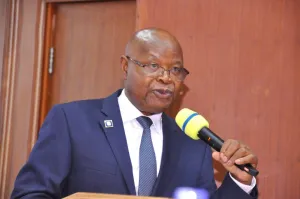


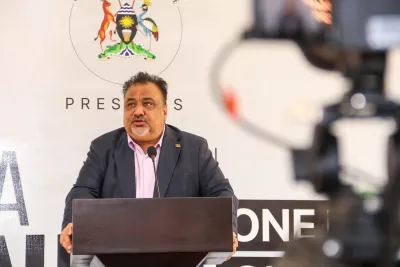
Uganda has moved closer to its long-awaited first oil milestone after the Executive Director of the Petroleum Authority of Uganda (PAU), Ernest Rubondo, began a two-day supervisory inspection of major oil and gas projects in the Albertine Graben.
The field visit is aimed at assessing construction progress, operational readiness and the development of infrastructure needed to support Uganda’s transition into an oil-producing country.
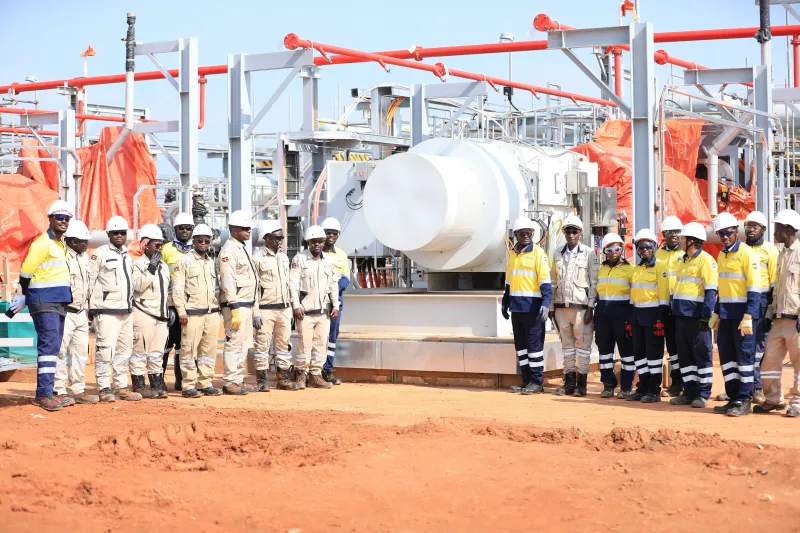
On the first day of the inspection, Rubondo visited EACOP Pump Station 1 (PS1) in Hoima District, the starting point of the East African Crude Oil Pipeline (EACOP).
According to project officials, EACOP is now about 92 percent complete and remains on course to receive Uganda’s first crude oil before the end of 2026.
Recent independent reporting has also placed the overall EACOP construction progress above 90 percent. EACOP is a 1,443-kilometre heated and insulated pipeline designed to transport Uganda’s crude from the Albertine Graben to the Chongoleani terminal near Tanzania’s Port of Tanga.
Beyond construction, the project has reported significant activity in employment, resettlement and environmental restoration.
Officials told the PAU delegation that approximately 12,000 jobs have been created, surpassing the original target of 7,500 positions.
The project has also completed and handed over 520 replacement houses to households affected by the development, while more than 500,000 trees have reportedly been planted under environmental restoration and conservation programmes.
Skills development is another area receiving attention. The EACOP Academy, established to strengthen local technical capacity, currently has 141 students, according to the project team.
The employment and skills figures come as Uganda continues to emphasise local participation in the petroleum sector. EACOP has previously reported that the project has created thousands of employment opportunities across Uganda and Tanzania while supporting national-content initiatives.
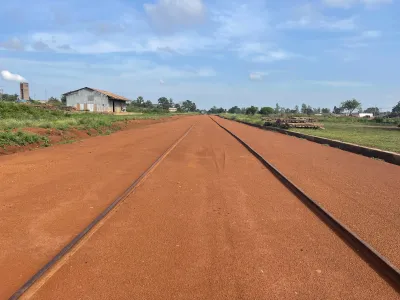
Rubondo also inspected the Kabalega Sub-Power Station, a critical electricity facility being developed to support EACOP operations.
Project officials said construction remains on schedule, with the facility expected to be ready to supply electricity to the pipeline project by October 2026.
The development of supporting power infrastructure is part of the wider network of facilities required to move Uganda's petroleum projects from construction into commissioning and eventual commercial operations.
Earlier government monitoring reports showed continued progress on power and pipeline facilities in the Hoima area, reflecting the interconnected nature of Uganda's emerging petroleum infrastructure.
Rubondo is expected to continue the supervisory visit on its second day with an inspection of the Tilenga Project, which covers parts of Buliisa and Nwoya districts.
The visit will focus on upstream development, including progress on production facilities and other infrastructure required to support Uganda's first oil.
Tilenga is one of the country's two major upstream oil developments, alongside the Kingfisher project. Crude from these developments will feed into the EACOP system through facilities linked to Pump Station 1 in Hoima.
The latest inspection comes as Uganda's oil and gas projects enter an increasingly critical phase of construction, testing and commissioning.
EACOP has previously reported rapid progress at Pump Station 1, while government and industry updates indicate that the wider pipeline project is approaching completion. The pipeline will carry Uganda's waxy crude from the Albertine region through Tanzania to the Indian Ocean coast for export.
The completion of EACOP, together with the readiness of the Tilenga and Kingfisher developments and associated infrastructure, is central to Uganda's plan to begin commercial oil production and exports.
Rubondo's supervisory tour therefore provides a timely assessment of whether the different components of the petroleum value chain are progressing together as Uganda approaches the first-oil stage.
With construction now in its final phase, attention is increasingly shifting from building infrastructure to commissioning, testing, operational readiness and the safe start-up of Uganda's petroleum production system.




Marlene Luwedde
Leave a Comment
Your email address will not be published.