
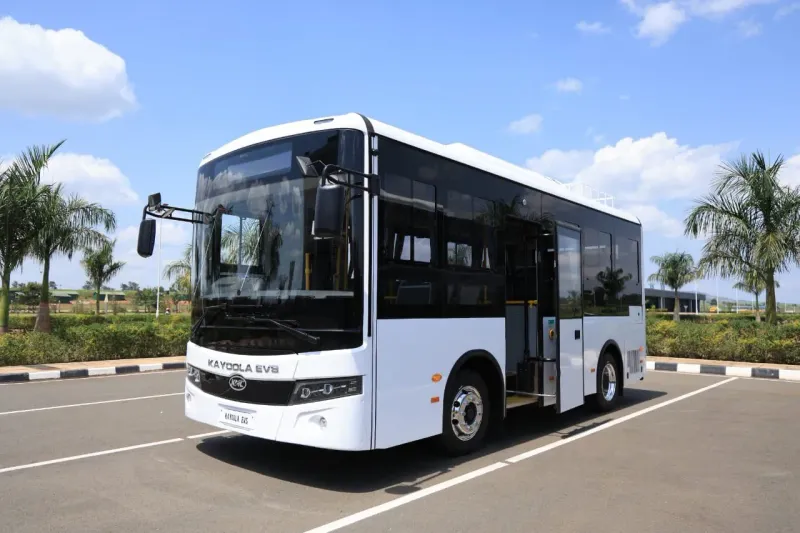


E-Bus Xpress Kiira Ltd (EBX) is set to expand its electric public transport network into Kira Municipality, with 15 locally developed Kayoola Electric Buses scheduled to begin operations on August 28, 2026.
The new service will connect some of the fast-growing residential communities in Kira and surrounding areas to Ntinda Hub and Kampala, offering commuters a scheduled alternative for daily travel across the Greater Kampala Metropolitan Area.
Under the planned rollout, the 15 buses will be distributed across three dedicated feeder routes, with five buses serving each corridor.
The first route will run from Ntinda through Najjera, Kira, Kitukutwe, Kiwologoma and Nakwero.
The second will connect Ntinda, Naalya, Kyaliwajjala, Namugongo and Sonde, while the third will link Ntinda, Kisasi, Kyanja and Kungu.
The expansion comes as electric and scheduled public transport services gain a larger presence in Kampala and its surrounding municipalities. Kiira Motors Corporation, which developed the Kayoola electric bus, launched E-Bus Xpress operations in Kampala earlier this year, initially deploying eight electric buses. KCCA said in May that the city was already looking at how locally manufactured buses could support a larger public transport network, including future mass-transit systems.
For commuters in Kira, the EBX service is expected to offer more than simply another way of getting around. The buses will provide scheduled services, air conditioning, onboard Wi-Fi and modern safety features, while passengers will use cashless payment systems.
Fares for the new service will start at UGX 800 for adults and UGX 400 for students, depending on the distance travelled.
EBX will also introduce a student-focused payment initiative known as the School Cashless Days Campaign. Under the programme, students will use smart digital wristbands to pay their fares quickly and conveniently.
Cash will not be accepted onboard the buses, reinforcing EBX's wider move toward digital public transport payments.
The cashless approach is already part of the E-Bus Xpress operating model. Kiira Motors says its electric mass-transit service uses digital payments, while its Kayoola buses are equipped with features including air conditioning, Wi-Fi and charging facilities.
The Kira rollout also highlights the growing role of locally manufactured vehicles in Uganda's transport sector.
The Kayoola EVS is part of Kiira Motors Corporation's electric vehicle portfolio, which includes several electric bus models designed for urban and longer-distance transportation. The company's current portfolio includes 8-metre and 10-metre Kayoola EVS models as well as a 13-metre electric coach.
Kiira Motors has positioned the Kayoola EVS as a low-floor electric city bus intended for urban mobility. Its published information says the 12-metre version can carry up to 90 passengers and has a range of about 300 kilometres on a single charge, depending on the configuration and operating conditions.
The growth of electric buses comes as Kampala faces increasing pressure on its road network.
KCCA says the capital has more than four million people during the daytime, creating a major demand for efficient mass transportation. The authority has been engaging Kiira Motors on bus production, technical training, maintenance and infrastructure needed to support a larger public transport system.
The wider national push is also significant. Uganda's Ministry of Science, Technology and Innovation has identified electric vehicles and local manufacturing as part of the country's industrialisation and clean-mobility ambitions. The Uganda E-Mobility Outlook Report 2024 noted that domestic electric-vehicle production capacity had grown significantly, with Kayoola electric buses forming part of that development.
The Kayoola platform has also been tested beyond Uganda's urban roads. In 2025, a Kayoola electric coach completed a journey of more than 13,700 kilometres through several African countries, including Tanzania, Zambia, Botswana, Eswatini and South Africa, before returning to Uganda. The expedition was presented as a demonstration of Uganda's growing capabilities in electric mobility and vehicle manufacturing.
That development gives the Kira service a significance beyond the immediate commuter routes. It places a locally developed electric vehicle at the centre of a public transport expansion aimed at serving communities that have experienced rapid residential and commercial growth.
The move could also contribute to Uganda's efforts to reduce emissions from road transport. Electric buses have no tailpipe emissions during operation, making them an important option for cities seeking to reduce pollution while improving public transportation.
For Kira residents, however, the immediate benefit is likely to be the availability of a structured service connecting residential areas with major commuter destinations.
With five buses planned for each of the three routes, EBX will be introducing a network designed around scheduled movement rather than the largely informal, demand-driven model that dominates much of Kampala's public transport.
The combination of fixed routes, scheduled services, cashless fares, onboard connectivity and electric propulsion could offer commuters a different experience from conventional public transport.
The launch also comes at a time when plans for expanded electric bus operations in Kampala are gathering pace. KCCA said in May that Kiira Motors was preparing for a much larger deployment, with the manufacturer aiming to support at least 100 buses in Kampala by the end of 2026.
Against that backdrop, the planned 15-bus Kira deployment could become an important extension of the emerging electric public transport network beyond the city centre.
From August 28, residents travelling through Najjera, Kira, Nakwero, Naalya, Kyaliwajjala, Namugongo, Sonde, Kisasi, Kyanja and Kungu will have access to a new electric transport option connecting them to Ntinda and Kampala.
For EBX, the expansion marks another step in its ambition to build a cleaner, more organised and digitally enabled mass-transit network. For Kira Municipality, it brings electric public transportation closer to communities whose demand for reliable connections to Kampala continues to grow.





Marlene Luwedde
Leave a Comment
Your email address will not be published.