
Hundreds of thousands of people joined demonstrations across the world over the weekend in protest against Iran’s government, following calls by exiled opposition figure Reza Pahlavi for a “global day of action”.
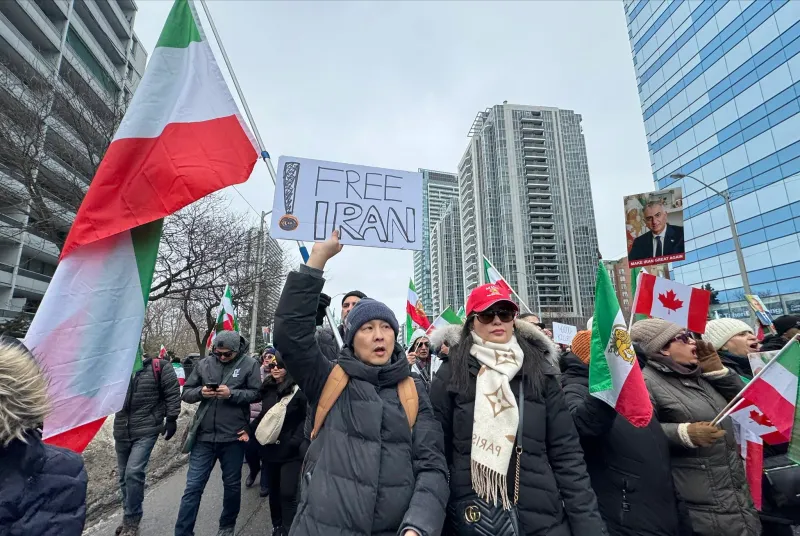
Large crowds gathered in major cities including Munich, Toronto, and Los Angeles, while smaller rallies were also held in London, Sydney, Lisbon, and Tel Aviv, reflecting growing involvement from Iranian diaspora communities and international supporters.
The protests come as unrest inside Iran continues, with demonstrations that began over the rising cost of living reportedly transforming into a wider movement against the country’s leadership.
Mass Protests Reported in Munich, Toronto and Los Angeles
Some of the largest crowds were reported in Europe and North America, where Iranian communities abroad have played a key role in organizing public demonstrations and amplifying international attention.
In Munich, an estimated 250,000 people attended a major rally. Speaking to supporters, Reza Pahlavi strongly criticized Iran’s leadership and condemned what he described as a violent crackdown on protesters.
He told the crowd that Iranians inside the country should know they are not alone, adding that global demonstrations were meant to show solidarity with those protesting inside Iran.
In Toronto, estimates suggested that around 350,000 people joined a demonstration, making it one of the largest rallies linked to the Iranian protest movement. Many participants told BBC Persian they were attending on behalf of relatives and friends inside Iran who could not speak freely.
Meanwhile, Los Angeles also saw large crowds, with members of the Iranian diaspora gathering in support of the demonstrations.
Noor Pahlavi Calls for End to Iran Nuclear Talks
Reza Pahlavi’s daughter, Noor Pahlavi, addressed supporters at a rally in Los Angeles, where she reportedly said Iranians had never been closer to freeing themselves from the current Islamic leadership.
She also urged the United States to end nuclear negotiations with Iran’s leaders, describing diplomatic talks as unacceptable while protest violence continues.
Her remarks came as international debate continues over how governments should respond to Iran’s internal unrest, particularly in relation to nuclear diplomacy and human rights concerns.
Trump Comments as International Pressure Grows
Former US President Donald Trump also commented on Iran’s political future, saying a change in Iran’s government would be “the best thing that could happen”.
However, it remained unclear whether his remarks were linked to Reza Pahlavi, who has been seeking a role in Iran’s political future.
In previous interviews, Trump described Pahlavi as “very nice,” but questioned whether he could gather enough support inside Iran to eventually lead the country.
Protests Began Over Cost of Living and Spread Nationwide
Street protests in Iran reportedly began on 28 December, initially driven by anger over economic hardship, inflation, and the rising cost of living.
The demonstrations later expanded beyond economic demands, spreading to more than 100 cities and towns across Iran’s provinces. Protesters reportedly expressed frustration over political repression, corruption, and lack of freedoms.
Observers say the protests have become one of the most widespread waves of unrest in Iran in recent years, drawing both domestic and international attention.
Death Toll Disputed as Rights Groups Report Thousands Killed
The number of deaths linked to the protests remains disputed.
The US-based Human Rights Activists News Agency (HRANA) reported that more than 6,800 people have been killed, including over 150 children.
Iranian authorities have acknowledged at least 3,000 deaths, but have stated that some of those killed were members of the security forces.
Independent verification remains difficult because of restrictions on international reporting and limited access to protest areas.
Reza Pahlavi’s Political Role Raises Debate
Reza Pahlavi was groomed from birth to inherit Iran’s monarchy, but he was only 18 years old when the 1979 Islamic revolution ended his father’s rule and forced the royal family into exile.
Nearly five decades later, Pahlavi has re-emerged as one of the most prominent Iranian opposition voices abroad. Supporters say he represents a unifying symbol, while critics question whether his involvement could eventually lead to the restoration of monarchy.
Pahlavi has repeatedly denied wanting to restore the monarchy, insisting he supports a democratic process in which Iranians decide their future through free elections.
Diaspora Demonstrations Highlight Global Solidarity
The scale of rallies outside Iran highlights the influence of Iranian diaspora communities in cities such as Toronto, Munich, Los Angeles, London, and Sydney.
Many participants say they are protesting to raise awareness, support human rights, and speak on behalf of those inside Iran who face restrictions on free speech and public assembly.
International demonstrations have also drawn major media coverage, increasing global attention on the situation inside Iran and the government’s response to protest movements.
What Happens Next for Iran’s Protest Movement?
With demonstrations continuing inside Iran and international rallies growing, analysts say the coming weeks could be critical.
Supporters of the protest movement believe global pressure may increase calls for reform, while Iranian authorities have maintained that security forces are responding to unrest and protecting public order.
As the crisis continues, the international community remains focused on casualty figures, political developments, and the growing role of diaspora communities in shaping global attention on Iran.

Aldrige Kennedy
Leave a Comment
Your email address will not be published.