




Agriculture
MakSoy 7N Released: Makerere University Unveils High-Yield, Rust-Resistant Soybean Variety in Uganda
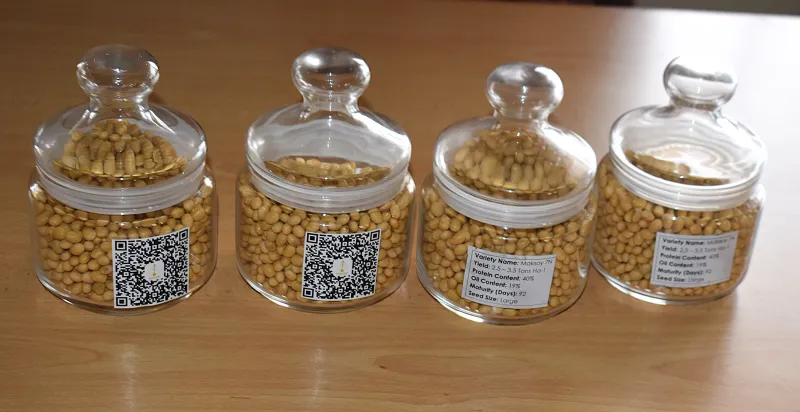
Uganda’s agricultural sector has received a major boost following the official approval of MakSoy 7N, a new high-yielding and soybean rust-resistant variety developed by the Makerere University Centre for Soybean Improvement and Development (MAKCSID).
The variety was approved by the National Variety Release Committee (NVRC) during its 47th meeting held on 13 February 2026 at the National Agricultural Research Laboratories (NARL) in Kawanda.
The release of MakSoy 7N is expected to significantly increase soybean productivity, strengthen Uganda’s food security, and enhance incomes for smallholder farmers.
Rigorous Testing Confirms Superior Performance
MakSoy 7N is a cross between 6N and SG and underwent extensive Distinctness, Uniformity, and Stability (DUS) testing across multiple agro-ecological zones in Uganda. Trials were conducted in Kabanyolo (Wakiso), Nakabango (Jinja), Ngetta ZARDI (Lira), Abi ZARDI (Arua), Bulindi ZARDI (Hoima), and Mubuku Irrigation Scheme (Kasese).
Testing followed Uganda’s Seeds and Plant Act (Cap. 41) and international UPOV guidelines.
Researchers confirmed that MakSoy 7N is clearly distinct from MakSoy 3N in pod color, stem hair, and seed hilum characteristics. The variety met the strict 1% off-type uniformity standard and demonstrated stability across seasons and locations.
Following successful on-farm trials under real farmer conditions, the National Seed Certification Service recommended the variety for official release.
High Yields and Strong Disease Resistance
According to Prof. Phinehas Tukamuhabwa, Director of MAKCSID and Principal Investigator, MakSoy 7N delivers:
- Yields of 3–3.5 tons per hectare
- Maturity period of approximately three months
- Strong resistance to soybean rust
- Excellent agronomic performance across diverse regions
Soybean remains a strategic crop in Uganda, containing about 40% protein and 20% oil. It supports human nutrition, livestock feed production, agro-processing industries, and soil fertility improvement through nitrogen fixation.
MakSoy 7N was developed to combat yield stagnation, increasing disease pressure, and rising national and regional demand for improved soybean varieties.
Building on the Success of MakSoy Varieties
MakSoy 7N joins six previously released varieties (MakSoy 1N–6N) developed by MAKCSID. Impact studies by the Vegetable Oil Development Project indicate that 93% of Ugandan soybean farmers already grow MakSoy varieties, demonstrating strong national adoption and trust in the breeding program.
The latest release is expected to further strengthen Uganda’s soybean value chain and reduce dependence on imported seed varieties.
Strong Institutional and Development Partner Support
The research behind MakSoy 7N was supported by the Ministry of Agriculture, Animal Industry and Fisheries (MAAIF), the National Oil Seeds Project (NOSP), and the International Fund for Agricultural Development (IFAD).
Additional partners included:
- National Agricultural Research Organization (NARO)
- Regional Universities Forum for Capacity Building in Agriculture (RUFORUM)
- International Institute of Tropical Agriculture (IITA)
- Soybean Africa Ltd
- ISSD Uganda
- Makerere University Animal Science Laboratory
The research team was praised by NVRC Chair Dr. Joseph Kikafunda for its dedication to improving national food security. He urged stakeholders to prioritize rapid seed multiplication and nationwide distribution to ensure farmers benefit quickly.
Recognition of the Research Team
Dr. Mildred Ochwo Ssemakula, Head of the Department of Crop Science and Horticulture at Makerere University’s College of Agricultural and Environmental Sciences (CAES), commended the team for more than eight years of dedicated research work leading to the release.
She also acknowledged Makerere University’s critical role in training agricultural professionals who now serve in key innovation and regulatory institutions across Uganda.
The MakSoy 7N research team includes breeders, pathologists, entomologists, agronomists, seed scientists, data scientists, and germplasm specialists led by Prof. Tukamuhabwa.
Additional Crop Varieties Approved
During the same NVRC meeting, new varieties from other institutions were also approved:
- Three purple-fleshed sweet potato varieties (NAROSPOT 8P, 9P, and 10P) developed by the National Agricultural Research Organization (NARO), known for high yields and rich provitamin A content.
- Two high-yielding sorghum hybrids, NS1 (Tongo) and NS5 (Tara), developed by NASECO (1996) (U) Ltd, suitable for food, livestock feed, bioethanol production, and brewing.
These approvals reflect Uganda’s continued commitment to agricultural innovation, seed sector development, and reducing reliance on imported hybrid seeds.
What MakSoy 7N Means for Uganda’s Agriculture
The release of MakSoy 7N signals a significant milestone in Uganda’s agricultural research and seed development efforts. With its high yield potential, short maturity period, and strong disease resistance, the variety is poised to:
- Increase national soybean production
- Improve smallholder farmer incomes
- Strengthen agro-industrial supply chains
- Enhance food and nutrition security
As seed multiplication begins, stakeholders are optimistic that MakSoy 7N will play a transformative role in modernizing Uganda’s soybean farming sector and advancing climate-smart agriculture practices nationwide.






The Sunrise Editor
Leave a Comment
Your email address will not be published.