
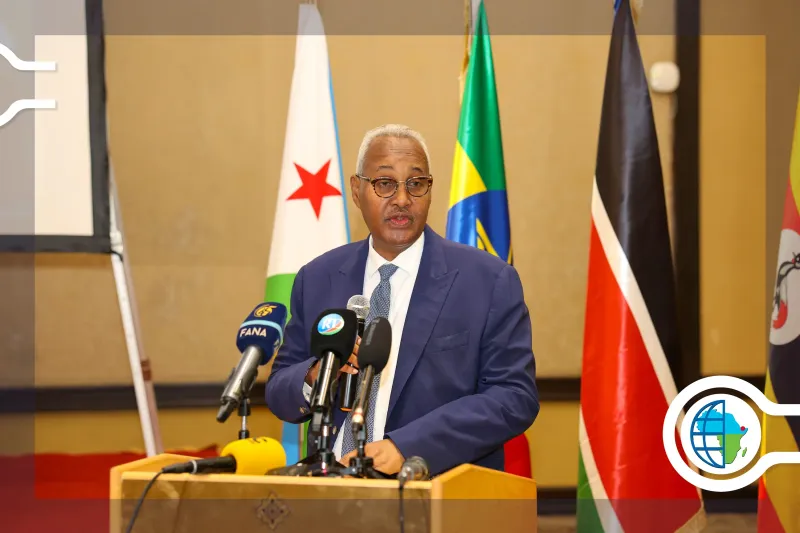





Uganda has joined Djibouti, Ethiopia and South Sudan in signing an agreement establishing the Djibouti–Ethiopia–South Sudan–Uganda (DESSU) Corridor Authority, a major regional initiative expected to strengthen cross-border trade, transport connectivity and logistics cooperation.
The signing ceremony was held at Djibouti Palace Kempinski in Djibouti City, in the presence of the Ministers of Transport from the four countries, as well as the Ambassador of the European Union.
The agreement marks a significant milestone in efforts to create a structured framework for regional infrastructure development, trade facilitation and efficient movement of goods and people between the member states.
DESSU Corridor Authority Builds on Last Year’s MoU
The establishment of the DESSU Corridor Authority follows the signing of a Memorandum of Understanding (MoU) on the Djibouti Corridor last year. The DESSU Corridor is designed to enhance trade and logistics systems by linking inland economies in East Africa and the Horn of Africa to the Port of Djibouti, one of the region’s most strategic maritime gateways.
Officials described the creation of the authority as a step with strong economic and strategic value for all four countries, aimed at boosting regional integration and lowering the cost of doing business.
Djibouti Says Corridor Aligns With Agenda 2063 and AfCFTA
Speaking during the ceremony, H.E Hassan Houmed, Djibouti’s Minister of Infrastructure and Equipment, said the DESSU Corridor reflects the goals of the African Union’s Agenda 2063, which promotes an integrated and connected continent.
He also noted that the corridor supports the objectives of the African Continental Free Trade Area (AfCFTA), and strengthens cooperation within regional blocs including IGAD and COMESA.
Djibouti reaffirmed its commitment to ensuring the corridor becomes a successful model of regional integration.
Ethiopia Highlights Connectivity for Landlocked Nations
Ethiopia’s Minister of Transport and Logistics, H.E. Alemu Sime Fayisa (PhD), described the corridor as a strategic initiative that will improve regional trade and shared prosperity.
He stated that Ethiopia is committed to playing its role as a connector linking Uganda and South Sudan to the sea through the ports of Djibouti, emphasizing the importance of ensuring no country remains isolated from global trade networks.
He also pointed out that a seamless logistics system is increasingly necessary as Ethiopia’s economy and population continue to grow.
Uganda Calls for Action and Removal of Trade Barriers
Uganda’s Minister of Works and Transport, Hon. Edward Katumba Wamala, urged member states to treat the signing as more than a formal ceremony.
He called for strong implementation and accountability, emphasizing that the agreement must translate into real progress for citizens. He also highlighted the need for improved roads, railways and air connectivity, as well as seamless borders.
Katumba Wamala stressed that removing non-tariff barriers (NTBs) and improving cross-border efficiency should be prioritized to ensure the corridor becomes meaningful and beneficial.
During his visit, the minister paid a courtesy call on Mr. Aboubaker Omar Hadi, Chairman of the Djibouti Ports and Free Zones Authority, where they discussed transport and logistics cooperation to strengthen trade between Uganda and Djibouti.
The discussions also included options for Uganda Airlines to potentially operate flights between Entebbe and Djibouti in the future as part of improving connectivity.
South Sudan Sees Corridor as a Major Development Opportunity
South Sudan’s Minister of Transport, Hon. Lt. Gen. Rizik Zakaria Hassan, described the agreement as historic, noting that it demonstrates strong political will among the participating countries.
He said South Sudan, being among Africa’s landlocked nations, requires quality and reliable infrastructure and stands to benefit significantly once the corridor becomes operational.
He added that his focus upon returning home will be to push for speedy ratification and domestication of the treaty.
Djibouti Ports Authority Outlines Route and Expected Benefits
The Chairman of the Djibouti Ports and Free Zones Authority explained that the DESSU Corridor is intended to function as an integrated logistics and economic system designed to deliver measurable results.
According to the address, the corridor is expected to link the Port of Djibouti to key inland cities including Addis Ababa, Jimma, Boma, Raad, Kapoeta, Nimule, Gulu and Kampala, creating a continuous logistics chain from international maritime routes to inland production and consumption centres.
He said the corridor is expected to reduce logistics costs, shorten transit times and improve supply chain predictability. These improvements could also lower the cost of imports and strengthen export competitiveness, supporting industrial development, job creation and GDP growth across the four countries.
What the DESSU Corridor Authority Means for Uganda and the Region
The signing of the DESSU Corridor Authority agreement is expected to boost regional trade by improving transport efficiency and encouraging stronger economic cooperation.
For Uganda and South Sudan, the corridor could create improved access to international shipping routes through Djibouti, helping businesses reduce transport delays and improve competitiveness.
The initiative also reflects Africa’s broader push toward regional infrastructure corridors that support trade facilitation, investment growth and long-term economic integration.
With the agreement now signed, attention will shift toward implementation, coordination among member states and the operationalization of key infrastructure and logistics priorities.







Sunrise reporter
Leave a Comment
Your email address will not be published.